
in figures
Projected investment towards Jafurah gas development:More than USD 100 billion
Jafurah's total gas reserves:Approximately 6.5 tcm
Saudi Arabia's target increase in sales gas production by 2030:60%
Projected size of Saudi Arabia's digital oil and gas services market by 2032:More than USD 2.5 billion
The key initiatives shaping Saudi Arabia’s energy future
May 29, 2025 Saudi Arabia


A wave of high-value contracts and bold projects is reinvigorating Saudi Arabia’s upstream segment, with gas emerging as the focal point within the nation’s push for diversification.
Several key trends are propelling Saudi Arabia’s upstream, including major investments in new energy projects, technological innovation aimed at improving operational competitiveness and government-led efforts to diversify the energy mix.
As a precursor to the wave of activity and project launches in 2025, Saudi Aramco announced in June 2024 the award of USD 25 billion in contracts to boost gas production and build supporting infrastructure. The latest round of projects is centred on Saudi Arabia’s two current flagship developments: phase two of the Jafurah shale gas project and phase three of the Master Gas System (MGS) expansion project.
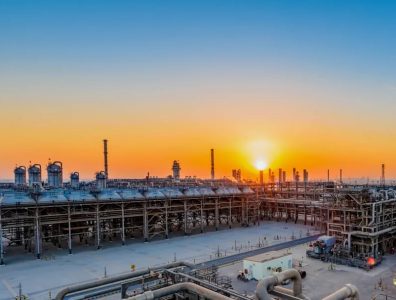
JAFURAH: BIG AND BREAKING GROUND Located in the Eastern Province, the 17,000-square-mile Jafurah basin is currently the largest liquids-rich gas play in the Middle East. In February 2024, Aramco added an estimated 424.8 bcm of gas and 2 billion barrels of condensate to the gasfield’s proven reserves, raising the total to approximately 6.5 tcm – the equivalent of around 70 years’ worth of Japan’s LNG imports. The company plans to invest more than USD 100 billion across the project’s lifecycle in what is set to become the largest shale gas development outside of the USA. First gas is anticipated to arrive in 2025, with production plans targeting 56.6 mcm per day by 2030, along with significant volumes of ethane, NGLs and condensate.
Since receiving regulatory approval in February 2020, Aramco has fast-tracked the giant gas project. It awarded USD 10 billion in contracts in November 2021 to build a gas plant and compression facilities to subsurface specialists and EPC contractors, including TAQA, Baker Hughes, SLB, Halliburton and NESR. This was followed by the selection of Worley for project management services and of Arabian Drilling for the supply of 10 onshore rigs in a contract worth USD 800 million. Adding to the slew of work orders, 13 well tie-in contracts were awarded at the play between December 2022 and May 2024, for a combined value of USD 1.63 billion.
To mark the beginning of Jafurah’s second expansion phase, Aramco awarded 16 agreements in June 2024 worth USD 12.4 billion for the construction of gas compression facilities and pipelines and to add more processing trains and export infrastructure to the Jafurah Gas Plant. New contracts also include the development of the Riyas NGL fractionation facility in Jubail, which will feature new fractionation trains along with storage and export infrastructure to handle the increased output from the field. Major international engineering giants have been selected to work on this phase, including India’s Larsen & Toubro, Spain’s Técnicas Reunidas, Korea’s Hyundai E&C and the Power Construction Corporation of China.
Naif Al Hadrami, executive director at NESR, highlights the company’s intensified focus on unlocking the vast potential of the Jafurah play: “Our key projects in Saudi Arabia include our completion services in Jafurah, the largest unconventional resource in the MENA region, where we have leveraged technologies and operational strategies to make Jafurah among the highest-performing unconventional resources in the world.”
FUELLING CHANGE, GAS FIRST Aramco’s contract spree forms part of its wider strategy to pivot Saudi Arabia away from oil dependence, expand into renewables and establish the country as a leading gas and LNG producer by 2030. To achieve this objective, the NOC has set a goal to increase Saudi Arabia’s sales gas production by more than 60% by 2030, compared to 2021 levels. The country ultimately aims to generate 50-55% of its power from natural gas by 2030.
A key link in the company’s gas strategy is the MGS, one of the largest integrated gas networks in the world. Operational since the 1980s, it was originally designed to capture associated gas being flared off in producing oilfields and transport it across the country for use by industrial companies. Since then, the MGS has expanded significantly in line with Saudi Arabia’s drive to develop its gas resources, and the transport system’s capacity was increased to 354 mcm per day upon completion of its second phase in 2021.
The ongoing third phase of development has sparked a surge of activity which began to take shape in 2024. In June, a total of 15 new lump sum turnkey contracts were awarded for the expansion, collectively valued at approximately USD 8.8 billion. The new developments are set to add 89.2 mcm per day in capacity by 2028, supported by the installation of 4,000 kilometres of pipelines and 17 additional gas compression trains. Upon completion, the third phase is expected to bring the system’s total capacity to around 15.6 bcf per day.
Also in June 2024, Aramco awarded 23 new gas rig contracts worth USD 2.4 billion, along with two directional drilling contracts valued at USD 612 million. These upstream initiatives coincide with the company’s plans to increase offshore output by 300,000 bopd at the Marjan field and by 250,000 bopd at the Berri fields before the end of 2025. Both sites will benefit from new oil and gas separation facilities and gas processing plants, including the Tanajib Gas Plant in Al Khobar.
SERVICE SECTOR OVERDRIVE The upswing in activity is creating a dynamic competitive landscape, with global majors such as SLB, Halliburton and Baker Hughes competing for key contracts alongside local heavyweights NESR, TAQA and a growing number of domestic cohorts. Saudi drilling services provider ADES Holding, for example, has grown significantly on the back of Saudi Aramco’s expansion projects and localisation programmes.
“ADES has evolved from being a player in the Saudi market to becoming a National Champion and playing a critical role in supporting Aramco’s exploration and production goals,” ADES Holding Group CEO Mohamed Farouk told The Energy Year. “Around 50% of the offshore rigs in Saudi Arabia belong to our fleet; we have excellent visibility and control over these assets, and they are a robust part of the national supply chain.”
Despite target pressure and rigorous project deadlines, the sector continues to emphasise high standards for all participants. As Rayed Eskandrani, vice-president, Northern Middle East, at TAQA puts it: “To operate with Aramco, companies must meet strict standards – it’s not just about having a commercial registration. You need to demonstrate high levels of safety, a track record and risk management capabilities.” The specifications that domestic and international contractors alike are expected to uphold effectively limit the number of viable competitors.
DIGITAL DRIVES THE DRILL Saudi Arabia’s Vision 2030 development programme is strongly encouraging the R&D departments of sector players to prioritise the adoption of AI, IoT, machine learning and data analytics in the equipment and processes they deploy along the oil and gas value chain. The country’s digital oilfield segment is expected to expand to more than USD 2.5 billion by 2032 as it grows on Aramco’s digital transformation strategy launched in 2017 to boost efficiency and reduce operational costs.
A robust digital presence is growing alongside the NOC as oilfield services companies invest to swiftly develop and deploy technologies, with a number of domestic players holding positions at the forefront of this wave of innovation. Among them is drilling technology company WellsX, developer of AI-infused improvements to boost the performance of equipment already called on to operate at very high standards. “Technologically, we are proud of our advanced drilling solution, but we’re not stopping there,” said Kamil Zakirov, the company’s chairman. “We have new products in the pipeline being tested in the field, and others are in development or planning stages.”
Given their heightened technological capabilities, it is no surprise that domestic players are scaling their operations beyond national borders. ARO Drilling, a joint venture between Aramco and US offshore drilling contractor Valaris is a case in point. “ARO Drilling will keep focusing on modernisation, automation and utilising data and fit for purpose AI to drive innovation,” Mohamed Hegazi, CEO of the Khobar-based company, told The Energy Year. “Our aim is not just to serve the domestic market, but to lead the industry as a unique company constructing and operating the best new builds, globally.”
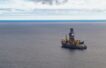
Photo courtesy of Saudi Aramco
Read our latest insights on:
More content from Saudi Arabia




Quality seismic decisions for Angola
INTERVIEW
Latest news and features



Latest Reports


The Energy Year Oman 2026
The Energy Year Kuwait 2025
The Energy Year Angola 2025
The Energy Year Nigeria 2025
The Energy Year Saudi Arabia 2025
The Energy Year UAE 2025

