
UAE gas production shifts to the fast lane
December 24, 2024 UAE
UAE 


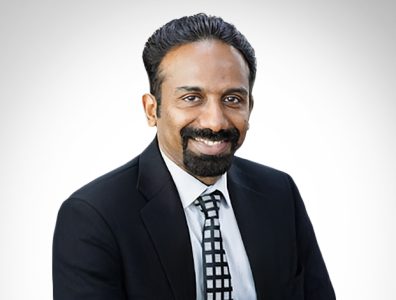
Harish Muhammed Bashir, managing director of Astra Engineering & Construction, talks to The Energy Year about ADNOC’s emphasis on achieving faster production times in oil and gas developments and the cost savings that can be obtained with design-build-own-operate-maintain contracts for early production facilities (EPFs). Astra Engineering & Construction is an integrated EPC company specialising in early production facilities and pipeline projects.
What role have EPFs played in Astra Engineering & Construction’s growth?
EPF projects offer tremendous growth potential for ADNOC and can support their goal of boosting output to 5 million bopd by 2027. We are proud to play a significant role in this effort, being EPF-qualified with ADNOC. At the moment, we are progressing with prestigious ADNOC projects which are part of their production enhancement plan.
The requirement for fast-track projects has increased a lot in the past year, which has led our company to become very involved in EPFs. Because of that, we are building a state-of-the-art fabrication facility in the Industrial City of Abu Dhabi.
The fast-track segment is not an area where all EPC companies have a foothold – only companies who truly offer turnkey solutions can compete there. Traditional EPC projects follow a linear progression, starting with engineering, then procurement, then construction, and this often takes a minimum of 24 months. In contrast, we can work on all the phases, including fabrication, in parallel, which can reduce the time to 12 months.
What are the key elements of your growth strategy for the next few years?
In the first eight months of 2024, we have more than doubled our business, and our revenue has grown ten-fold. We are poised to continue growing in 2025, and we are very optimistic about a few tenders that we have recently bid on. Beyond the UAE, we see opportunities in Saudi Arabia, Oman and certain projects in Libya and Iraq.
This rapid growth brings challenges as well in terms of operations and financing, and it is a big priority for us to maintain our excellent track record. To that end, we have reorganised the company into three divisions, representing the three business segments where we see the most potential: EPF projects, fabrication and construction.
We continue to see many opportunities in the EPF segment because it is the type of execution that ADNOC needs, and traditional EPC companies that do not understand the concept are unable to compete. Conventional EPC companies can do EPC projects very well, but their process takes time, and now they struggle because there is no time – production needs to arrive faster. Also, the EPF projects tend to go with fit-for-purpose designs, not necessarily 100% ADNOC-approved designs.
Has the “Make it in the Emirates” initiative influenced your strategy?
We are a 100% domestic company, and the “Make it in the Emirates” initiative aligns perfectly with our vision. We recently signed a “Make it in the Emirates” contract with ADNOC, a blanket, long-term contract to make pressure vessels in our fabrication yard. It will allow us to create jobs and underlines our commitment to driving industrialisation in the UAE.
Do you see benefits to the integration of AI tools into your processes?
ADNOC is doing a lot on digitalisation and AI, and we want to be part of the AI revolution as well. We want to develop AI tools in-house. Our bidding team wants AI support because they generate hundreds of documents, and reading through them is time-consuming. We want to reduce the load with a tool that we are developing.
It cannot be any tool because these are client documents that are subject to NDAs [non-disclosure agreements] and other restrictions. You cannot put them in the public domain. We are developing a tool to read and process information with a software company based in the US, Infinite Technologies. ADNOC works with them, as well.
What is your vision for the company in the coming five years?
Five years from now, we aim to be a leading regional player. The EPF trend is going to be present in all GCC nations and internationally as well. EPFs are going to change the way ADNOC and the global oil and gas industry work. By delivering projects faster, we help ensure timely production and bridge the gap as the industry gradually transitions to more sustainable energy sources.
While the UAE and the rest of the world are committed to reducing their reliance on fossil fuels, this transition will take time due to ongoing market and economic growth. Natural gas can serve as a crucial bridge fuel in this evolution, offering a cleaner, more flexible option as we move toward renewable energy.
Until that shift becomes fully realised, increasing gas production remains essential. By leveraging EPF concepts, we can expedite the implementation of natural gas field projects, ensuring that today’s energy demands are met while we steadily progress toward a more sustainable future.
Read our latest insights on:
-

How the UAE is building its future
INTERVIEW -

-

More content from UAE


Quality seismic decisions for Angola
INTERVIEW
Latest news and features



Latest Reports


The Energy Year Oman 2026
The Energy Year Kuwait 2025
The Energy Year Angola 2025
The Energy Year Nigeria 2025
The Energy Year Saudi Arabia 2025
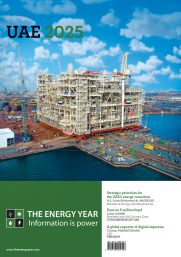
The Energy Year UAE 2025

