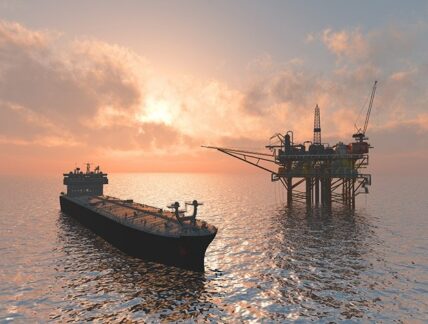
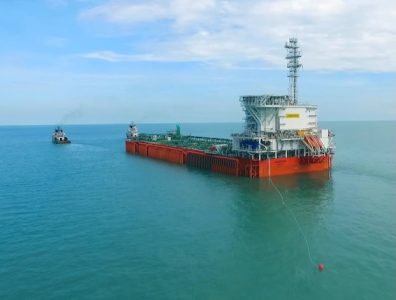
Indonesia’s archipelagic nature has pushed it to develop local LNG production and distribution. The government is betting on both large- and small-scale facilities…
READ MORE
2024 oil reserves:2.41 billion barrels
2024 oil production:601,000 bopd
2024 gas reserves:876 bcm
2024 gas production:70.6 bcm
Indonesia’s oil and gas sector has long been a key driver of the country’s economic development. Commercial production began in the late 19th century, with early discoveries in North Sumatra helping to lay the foundations for the modern industry. Hydrocarbons production remains an important contributor to the economy, even as Indonesia’s mature fields decline and domestic consumption continues to rise, increasing pressure on the country’s energy balance. Despite being Southeast Asia’s largest economy, Indonesia has faced recurring challenges in attracting foreign investment into upstream projects, driven by regulatory complexity, shifting fiscal terms and perceptions of policy risk.
Indonesia’s upstream and gas activities are overseen by SKK Migas, which has set out a roadmap aimed at improving project delivery, restoring production and accelerating exploration. State-owned Pertamina remains the dominant upstream player, while international companies continue to participate through production sharing contracts and partnerships. Much of Indonesia’s remaining gas potential sits offshore, often in frontier basins and remote provinces, requiring significant investment in infrastructure to bring volumes to market. The government has also promoted unconventional resources such as coalbed methane and shale gas as part of a broader push to strengthen domestic supply.
Indonesia remains an important LNG exporter, although its role has evolved over time. In the 1990s, it was one of the world’s leading suppliers, but it has since been overtaken by major exporters such as Qatar, Australia and the USA. Even so, Indonesia continues to supply regional markets, with Japan, South Korea and China among its key buyers, while also managing the growing domestic call on gas for power generation and industry.
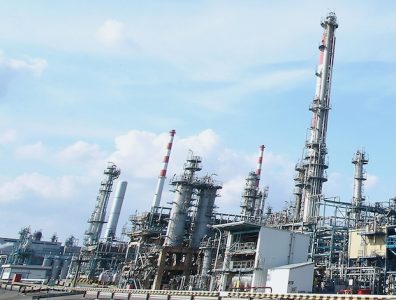
Alongside the upstream, Indonesia is seeking investment in midstream and downstream infrastructure. While the country has multiple refineries, capacity and configuration constraints mean domestic production does not fully meet demand, leaving Indonesia reliant on imports for a portion of its fuel needs. Pertamina owns and operates most refining assets and is pursuing upgrades to improve efficiency and product quality. With no cross-border oil pipelines, maritime transport remains central to the energy value chain. In gas, state-controlled Perusahaan Gas Negara plays a leading role in transportation and distribution and operates much of the country’s pipeline infrastructure.
ENEOS has acquired from Chevron a package of downstream assets in Southeast Asia and Australia for USD 2.2 billion.
READ MORE
SEG Solar is growing its solar module manufacturing capacity in the US with a new 4-GW factory in Texas.
READ MORE
Eni’s Geliga-1 gas discovery offshore Indonesia has delivered strong test results, supporting plans for fast-track development.
READ MORE
Eni has announced a giant gas discovery in Indonesia’s Kutei Basin, adding 142 bcm of gas and 300 million barrels of…
READ MORE
Japan has urged wholesalers to switch to Brent from Dubai pricing to curb fuel costs amid supply disruptions.
READ MORE
Eni has taken dual FIDs for deepwater gas hubs in Indonesia, boosting domestic supply and LNG exports.
READ MORE
Pankaj Kalra of Essar Oil and Gas Exploration and Production talks about boosting production at the flagship Raniganj asset.
READ MORE
Indonesia’s archipelagic nature has pushed it to develop local LNG production and distribution. The government is betting on both large- and small-scale facilities…
READ MORE
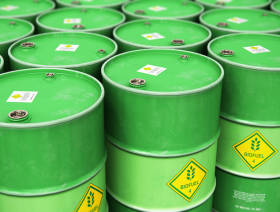
Despite the challenges posed by the pandemic, Indonesia is continuing to roll out an ambitious biofuels programme which is set to change the course of its hydrocarbons…
READ MORE
Eddy Kurniawan Logam, president-director of Logindo Samudramakmur, talks to The Energy Year about how Covid-19 has impacted the company’s operations and how Indonesia…
READ MORE
Iwan Chandra, president-director of Baker Hughes Indonesia, talks to The Energy Year about expectations for the market and project work in light of the Covid-19…
READ MORE
Yulian Dekri, president-director and CEO of Trans-Pacific Petrochemical Indotama (TPPI), talks to The Energy Year about how the company has addressed the Covid-19…
READ MORE
Dhira Nandana, president-director and CEO of Tripatra Engineers and Constructors, talks to The Energy Year about the post-Covid outlook for EPC in the Indonesian market…
READ MORE
Chevron has reached an agreement with Indonesia’s upstream regulatory body, SKK Migas, to accelerate investment and maintain drilling at the onshore Rokan block ahead…
READ MORE
Jim Truesdell, president-director of Samson Tiara, talks to The Energy Year about how the company is shifting its training courses online and whether Indonesia’s…
READ MORE
John Anis, then-general manager of Pertamina Hulu Mahakam and now president-director of Pertamina International Exploration & Production, talks to The Energy Year about…
READ MORE
Inarno Djajadi, president-director of the Indonesia Stock Exchange (IDX), talks to The Energy Year about the impact of the Covid-19 crisis on the Indonesian market and…
READ MOREWHOSE PLATFORM IS THIS?
ASK US