


Interview
Multinational - March 31, 2025
Sanjeev Tokhi of ONGC Videsh talks about the company’s most prolific projects worldwide.
READ MORE


2024 oil reserves:107.8 billion barrels
2024 oil production:10.7 million bopd
2024 gas reserves:47.2 tcm
2024 gas production:651.8 bcm
Russia is consistently among the world’s top three producers of hydrocarbons and holds the largest proven natural gas reserves globally. It is also a major LNG exporter, although sanctions and technology restrictions have slowed the expansion of several flagship Arctic LNG projects and tempered growth ambitions.
Hydrocarbons continue to play a central role in Russia’s public finances, but their contribution to the federal budget is lower and more volatile than it once was. In recent years, oil and gas revenues have generally accounted for around a third of federal budget income, fluctuating with prices, taxation changes and export volumes. Even as the economy has adapted to sanctions, the oil and gas sector remains a key source of hard-currency earnings and a cornerstone of state spending.
Domestic firms dominate Russia’s upstream sector, with Rosneft, Lukoil, Gazprom and Novatek among the largest players. Much of the country’s production base consists of mature fields, particularly in western Siberia, which has historically been the heart of the country’s oil industry. As a result, companies have focused heavily on brownfield optimisation, enhanced recovery and infrastructure upgrades, while pushing into more complex resources that were previously constrained by cost or technology. New growth areas include eastern Siberia and the Arctic, where gas projects and LNG developments have been central to the long-term strategy, even as project timelines have been disrupted by restrictions on equipment, finance and shipping.
Russia has extensive midstream infrastructure, including one of the world’s largest crude pipeline systems. The Druzhba pipeline network has historically been a key export route to Europe, but the structure of the country’s energy trade has shifted dramatically since the war in Ukraine. Pipeline gas exports to Europe have fallen to their lowest levels in decades, and crude and product flows have increasingly been redirected to non-OECD markets.
To sustain exports under sanctions, Russia has accelerated its pivot to Asia, expanding seaborne crude flows and reinforcing pipeline links to China. China has remained the single largest buyer of Russian oil, and Russian gas deliveries to China via the Power of Siberia pipeline have continued to grow as Moscow works to replace lost European market share with long-term Asian demand.
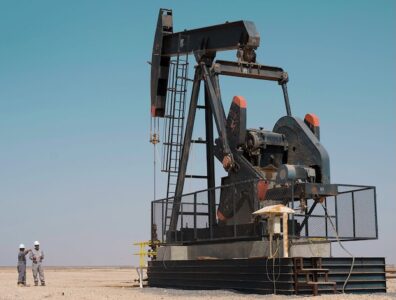
Chevron has moved to expand its upstream presence in Iraq through MoUs covering two oilfields and studies of crude pipeline…
READ MORE
Julius D. Rone of UTM Offshore talks about shifts in energy security priorities and new opportunities for African energy…
READ MORE
Yahya Al Yami of Khalifa Abdulrahman Algosaibi Investment talks about the competitive advantages of operating within the Saudi…
READ MORE
Ado Oseragbaje of Heritage Oil talks about unlocking oil and gas value in Nigeria’s onshore.
READ MORE
India's Bharat Coking Coal has soared 96% on its market debut, reaching a valuation of USD 2.2 billion.
READ MORE
IndianOil has purchased 2 million barrels of crude from Ecopetrol under an optional supply contract to offset Russian imports.
READ MORE
The EU’s plan to fully end Russian gas imports by 2027 faces legal, logistical and political hurdles.
READ MORE




Sanjeev Tokhi of ONGC Videsh talks about the company’s most prolific projects worldwide.
READ MORE
Russia plans to launch large-scale production of lithium carbonate in 2030.
READ MORE
Luz Stella Murgas of Naturgas talks about the importance of gas developments for Colombia.
READ MORE
Bulgarian officials are seeking an investor to provide seismic studies for a new exploration campaign in the Black Sea.
READ MORE
Gazprom has acquired a 27.5% stake in the Sakhalin-2 LNG project from Shell for around USD 1 billion.
READ MORE
US President Joe Biden has announced new sanctions against Russian entities, including oil shipping giant Sovcomflot.
READ MORE
Russia's state-controlled Rosneft has reported net profits of around $14 billion in 2023, a 47% increase over 2022.
READ MORE
Hungary has agreed to co-operate with Croatia on increasing the capacity of the Adriatic pipeline.
READ MORE
Saudi Aramco has received orders from the government to set its maximum sustainable capacity to 12 million bpd.
READ MORE
QatarEnergy has confirmed that global LNG deliveries will remain uninterrupted despite conflicts in the Red Sea region.
READ MOREWHOSE PLATFORM IS THIS?
ASK US
