
ONGC Videsh’s expanding global presence
March 31, 2025 Multinational


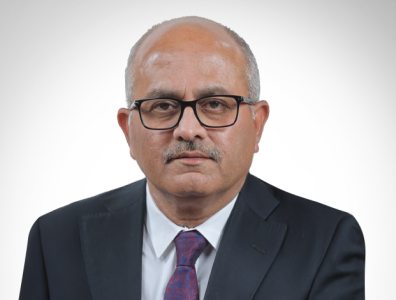
Sanjeev Tokhi, ONGC Videsh’s director of exploration, talks to The Energy Year about the company’s global presence and most prolific projects, the importance of Latin America in its portfolio and its efforts to reduce emissions. ONGC Videsh is a wholly owned subsidiary and overseas arm of ONGC, the national oil company of India.
Tell us about ONGC Videsh’s strategic focus and global asset portfolio.
India faces significant energy demand as a country of 1.4 billion people, requiring secure and stable energy supplies. Given India’s limited domestic oil and gas resources, ONGC Videsh’s primary mandate is to secure overseas fossil fuel sources to meet the country’s long-term energy needs.
ONGC Videsh is the international arm of India’s Oil and Natural Gas Corporation (ONGC). Since its inception in 1965, the company has forged alliances with other oil and gas majors and actively pursued hydrocarbon assets abroad. ONGC Videsh targets both onshore and offshore assets in various stages, from exploration to production. While crude oil remains a priority, the company is increasingly focusing on natural gas, a cleaner fuel, in line with the energy transition.
The company is present across multiple regions from Far East to Africa and Latin America. Presently, the focus is on both developing and producing assets. Developing assets can deliver results within 15-24 months, while producing ones provide immediate returns.
ONGC Videsh currently produces around 10.5 million tonnes of oil and oil equivalent of gas annually, with plans to increase this to 13 million-15 million tonnes within five years through organic and inorganic growth. For inorganic expansion, West Africa is emerging as a new hotspot, while we also prioritise maintaining presence in Bangladesh offshore, Far East and Middle East. Additionally, the company sees strong potential in emerging markets such as Guyana and Suriname in addition to Colombia.
What are some of the most prolific projects under your international asset portfolio?
ONGC Videsh’s international asset portfolio boasts several prolific projects, demonstrating its significant global footprint in the oil and gas sector. A foundational venture is Block 06.1 in Vietnam’s Nam Con Son Basin, a successful natural gas greenfield development. This project, featuring the Lan Tay and Lan Do offshore gas fields, highlights the company’s capability in seismic exploration and drilling, contributing vital natural gas to Vietnam’s domestic market. Another asset we have in Vietnam is Block 128 in the offshore Phu Khanh Basin.
The Rovuma Area-1 Offshore project in Mozambique stands out as a flagship investment, representing one of the world’s most substantial natural gas discoveries of recent times. Located in the deep waters of the Rovuma Basin, this project, with its significant gas discoveries such as Prosperidade and Golfinho-Atum, is poised to produce 13 million tonnes of LNG annually. Despite facing security challenges, ONGC Videsh, holding a 16% participating interest, is committed to bringing this project to fruition.
Beyond these major undertakings, ONGC Videsh maintains a strong presence in other key regions. In Bangladesh, the company operates two exploration projects, while in Myanmar, it manages six upstream and midstream ventures. The company’s participation in Abu Dhabi’s Lower Zakum Concession, alongside ADNOC and other partners, further underscores its involvement in high-yield projects.
Furthermore, ONGC Videsh has established a significant presence in South Sudan, with interests in the Greater Nile Oil Project and Block 5A in the Muglad Basin. In Azerbaijan, its involvement in the Azeri, Chirag, and Deepwater Gunashli fields, as well as the Baku-Tbilisi-Ceyhan pipeline, reinforces its strategic partnerships. Russia also represents a critical region, where the company holds stakes in major projects like the Vankor field and Sakhalin-1, which includes the Chayvo, Odoptu, and Arkutun-Dagi offshore fields. These diverse and high-yielding projects collectively illustrate ONGC Videsh’s robust international portfolio and its crucial role in the global energy landscape.
How significant is Latin America for ONGC Videsh?
Latin America constitutes a significant portion of ONGC Videsh’s global production, contributing approximately 20%, or 40,000-45,000 bopd, and representing a strong return on investment.
In Brazil, key projects include Block BM Seal-4, with a 25% interest partnered with Petrobras, and the BC-10 deepwater project in the Campos Basin, where ONGC Videsh holds a 27% stake, contributing substantially to the field’s 33,000 bopd production. The company is actively pursuing further offshore opportunities in Brazil to drive inorganic growth.
In Venezuela, ONGC Videsh holds a 40% interest in the San Cristobal field, in partnership with PDVSA, producing around 4,000 bopd. Additionally, the company is involved in the Carabobo-1 Area, which holds substantial reserves and currently yields approximately 8,000 bopd.
In Colombia, the Velásquez field, operated by Mansarovar Energy Colombia Limited– a 50-50 JV between ONGC Videsh and Sinopec – is one of our star projects. This maturing brownfield started production in 1947 and has undergone successful workover and infill campaigns, increasing production from 1,600 bopd to more than 4,500 bopd.
The company’s most significant Colombian asset is CPO-5, an under-explored block currently producing around 25,000 bopd, with plans to increase output to 30,000 bopd by 2025. Recently, ONGC Videsh acquired 250 square kilometres of high-quality seismic data from CPO-5, which is under analysis to unlock further potential.
What role do technical expertise and contextual know-how play in ONGC Videsh’s success?
ONGC Videsh benefits from the technical expertise of its parent company, ONGC. The firm leverages its strong technical background through specialised institutes focused on technology, geo-computing, health and safety, engineering and R&D. This technical foundation helps the company navigate challenges in complex environments.
ONGC Videsh’s extensive experience across diverse terrains – from shallow and deepwater offshore blocks to permafrost regions, mountainous terrain, jungles and deserts – enhances its ability to transfer knowledge between markets and overcome operational challenges.
What initiatives is ONGC Videsh undertaking to reduce emissions and promote sustainability?
Sustainability is a core objective for ONGC Videsh. The company prioritises social and environmental considerations when entering new markets. ONGC Videsh adheres to strict HSE standards and actively promotes reducing emissions.
While ONGC invests in renewables to achieve net zero by 2038, ONGC Videsh remains committed to lowering emissions at its oil and gas production sites. Initiatives include replacing gas turbine pumps with electric engines and adopting cleaner technologies. In Colombia’s Velásquez field, for example, associated gas is captured and converted into electricity rather than flared. Such decarbonisation measures reflect ONGC Videsh’s commitment in reducing its environmental footprint.
Read our latest insights on:
-

Data to de-risk Africa’s offshore assets
INTERVIEW -

-

More content from Multinational


Quality seismic decisions for Angola
INTERVIEW
Latest news and features




Latest Reports


The Energy Year Oman 2026
The Energy Year Kuwait 2025
The Energy Year Angola 2025
The Energy Year Nigeria 2025
The Energy Year Saudi Arabia 2025
The Energy Year UAE 2025

