
Trinidad and Tobago energy policy to shift with opposition win
 Trinidad and Tobago


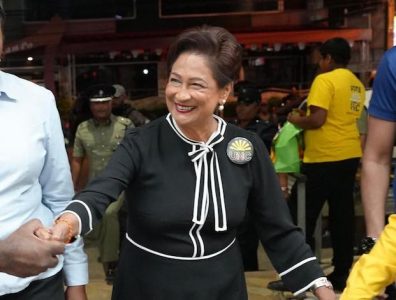
PORT OF SPAIN, April 29, 2025 – The United National Congress (UNC) has won Trinidad and Tobago’s general election and Kamla Persad-Bissessar will become prime minister.
The preliminary results show that the centrist UNC, campaigning on promises to raise wages and boost employment, won several parliamentary seats from the ruling People’s National Movement (PNM). PNM leader Keith Rowley conceded defeat late Monday night, acknowledging the party’s loss.
The UNC secured a commanding victory, capturing 26 out of 41 seats in the House of Representatives. This triumph, achieved in alliance with the Coalition of Interests – a consortium of political parties and labour unions – signals a significant policy shift, particularly concerning the energy industry.
REVITALISING THE ENERGY INDUSTRY: Central to the UNC’s platform is the revival of Petrotrin, the state-owned oil company that was shuttered in 2018 amid allegations of corruption and mismanagement. Persad-Bissessar has pledged to reopen the refinery, aiming to restore jobs and bolster domestic fuel production. This move is anticipated to rejuvenate the downstream sector and reduce reliance on imported refined products.
The new administration also intends to address the decline in oil and gas revenues, which saw a projected 15% decrease in 2025. By focusing on enhancing production and exploring new fields, the government aims to stabilise and eventually increase energy sector earnings.
STRATEGIC ALLIANCES: The formation of the Coalition of Interests has fortified the UNC’s position, bringing together various political entities and influential labour unions such as the Oilfields Workers’ Trade Union (OWTU). This alliance underscores a commitment to labour rights and positions the government to implement energy policies that are both economically and socially inclusive.
INTERNATIONAL DYNAMICS: The election outcome may also recalibrate Trinidad and Tobago’s international energy relations. Under the previous administration, ties with Venezuela were strengthened, leading to US sanctions that affected energy projects. Persad-Bissessar’s leadership is expected to adopt a more balanced foreign policy, potentially easing tensions and opening avenues for renewed foreign investment in the energy industry.
CHARTING THE FUTURE: With a clear mandate, the UNC-led government is poised to implement its energy agenda, focusing on revitalising Petrotrin, stabilising revenues, and fostering inclusive growth. While challenges persist, particularly in navigating global energy markets and domestic economic pressures, the administration’s proactive stance offers a roadmap for rejuvenating Trinidad and Tobago’s energy landscape.
Photo courtesy of Kamla Persad-Bissessar on Facebook
Read our latest insights on:

More content from Trinidad and Tobago





Quality seismic decisions for Angola
INTERVIEW
Latest news and features




Latest Reports


The Energy Year Oman 2026

The Energy Year Kuwait 2025
The Energy Year Angola 2025
The Energy Year Nigeria 2025
The Energy Year Saudi Arabia 2025

The Energy Year UAE 2025

