
Kuwait’s AEPCo on renewables development
August 26, 2024 Kuwait


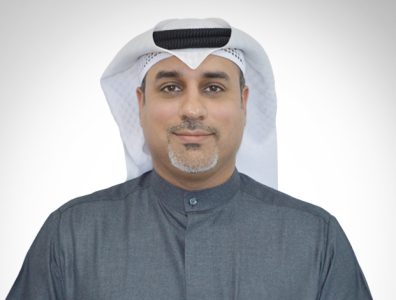
Hassan Qasem, CEO of Alternative Energy Projects Company (AEPCo), talks to The Energy Year about the company’s growing footprint in the GCC and possible regulatory changes in Kuwait to incentivise the uptake of renewable power sources. AEPCo is a project development and consultancy company that designs, builds, finances and operates renewable energy assets throughout the MENA region.
How have Kuwait’s renewables targets evolved and what have been the key drivers?
The government’s original target of generating 15% of the country’s power from renewables was based on a conservative economic growth scenario. Electricity demand has increased significantly due to urban development in the north and south of the country, with several big cities being built up as we speak and a full infrastructure network requiring power. It is reasonable that the target will be revised to around 20-25%.
A development framework for renewables and the associated umbrella laws are in place, the problem lies in the mechanism for implementing the plan. To give you some perspective on the issue, of the four projects that are central to Kuwait’s renewables strategy, only Shagaya Phase 3, for 1.1 GW, has been released for prequalification so far. The plan is to pre-qualify one project per year, but I think that’s going to be tight. To hit the target, more projects need to come on line faster.
Can you give us an overview of AEPCo’s main projects at the moment?
We submitted our RFQ [request for qualification] for Shagaya Phase 3; the results announcement is expected in mid-May 2024. This is a project for which you cannot qualify if you are just an EPC company. You must be a developer. AEPCo is a pioneer in renewables, and we are the only player in Kuwait who operates as a developer with an EPC arm. Our competitors are mostly pure EPC companies.
Our core business is being a developer and an investor, which means that we own, develop and finance the project, and then operate it for the long run. Therefore, projects such as Shagaya are what suit our business model best.
We are currently executing several projects and collaborating with many partners and local investors to grow our portfolio, placing a huge emphasis on Kuwait. Besides Shagaya, we have a small 2.6-MWp project with KNPC and a 23-MWp project with a Kuwaiti Group, which wants to install solar systems in a number of its factories.
What are the barriers that are slowing down foreign investment in renewables and keeping the segment from truly taking off?
Foreign investors look for a trustworthy government and clear regulations. From a financial perspective, Kuwait’s credit rating is very high and the currency is stable. Devaluations and defaults are not an issue. Banks love the country, so financing is not usually a problem. What discourages investors is uncertainty. Kuwait has a poor track record for launching projects and subsequently cancelling them due to recurrent changes in political leadership. If we want to ensure a consistent flow of investments, we need to drastically curb this instability.
From a growth and sustainability perspective, the country has to adopt renewables. What we need is a clear mandate from the government, complete with regulations and a commitment to enforce them. If that happens, I guarantee you, the market will thrive. The demand is there and supply will follow.
What is your assessment of the current regulatory framework for renewables and what improvements could make the segment more attractive and competitive?
Utilities and energy companies are vertically integrated and heavily subsidised. The system is not competitive and subsidies are a heavy burden for the government. In 2023, they amounted to KWD 4.6 billion [USD 15 billion], which is a huge slice. Instead of being a source of revenue, the sector is a heavy budgetary cost.
Current subsidies cover more than 95% of actual generation costs. The government pays somewhere in the range of 30 fils [USD 0.09], and in some cases up to 50 fils [USD 0.16], per KWh. The actual rate is affected by gas prices since Kuwait does not have enough gas for power generation and must import most of it from Qatar.
The government announced it would begin to work towards a FIT [feed-in tariff] system, which is the mechanism used in Europe, under which the government will buy renewables from offtakers at an incentivised price. The announcement was made a few years ago and now authorities are pushing it forward again. It is the only way that commercial, residential and industrial projects can truly kick off.
How do you evaluate the domestic power infrastructures and how keen are oil and gas companies to implement renewable solutions?
In terms of infrastructure readiness, meaning the ability to handle contributions from renewable energy sources, our network is very strong compared to that of other GCC countries. Although we still do not have a superstructure, we operate at 400 kV, which is a huge backbone. I don’t think we have ever had capacity issues on our network and renewables won’t alter that. Kuwait’s total installed generation capacity is 20 GWh and load capacity is 18 GW, while renewable sources barely reach 100 MW.
The adoption of renewable energies in the oil and gas sector is constrained by the nature of the K-companies. PDO in Oman is a hybrid company owned by the State together with Shell, TotalEnergies and others. The K-companies, on the other hand, are fully State-owned and follow the government’s instructions. They cannot independently decide their uptake of renewables. If the government tells them to decarbonise, they will. But there is no such mandate at the moment.
What are AEPCo’s main operations outside Kuwait?
In Oman, we have bid for and participated in many projects for OPWP [Oman Power and Water Procurement Company], such as Ibri II and Manah I and II. Ibri II is a 600-MW PV plant, the largest of its kind in Oman. Our partner in the project was ACWA Power from Saudi Arabia. The RFQ for Ibri III has been issued and will close at the end of March 2024, and AEPCo Is planning to participate.
In March 2024, we signed on a 50-MW, USD 34-million project with the Jordanian government. We will make the initial designs and investment and hire third parties to execute. We are also working on two commercial projects in the country, for 6 MW and 3 MW, and we had two others that came on line in 2023. That same year, two other installations of ours came on line at Sadafco’s warehouses in Riyadh and Jeddah, in Saudi Arabia.
We typically execute projects from a few hundred megawatts up to around 1 GW in partnerships, as the workload is high and it is always better to split the responsibility to reduce risks.
What are AEPCo’s main strengths and ambitions for the future?
AEPCo has been operating for almost 20 years. Our Group has investments in Jordan and Oman, connections throughout the region and good access to bank financing.
We aim to become a world-leading developer in renewables. We started in the MENA region and are moving forward with multiple new investors, both local and international who have an appetite for the segment. Next, we want to establish ourselves in Tunisia and Morocco, where the demand for renewables is also growing. Our installed capacity at the moment is around 620 MW, and we plan to grow it to 5 GW in the next five years.
Read our latest insights on:
More content from Kuwait



Latest news and features





Latest Reports


The Energy Year Oman 2026
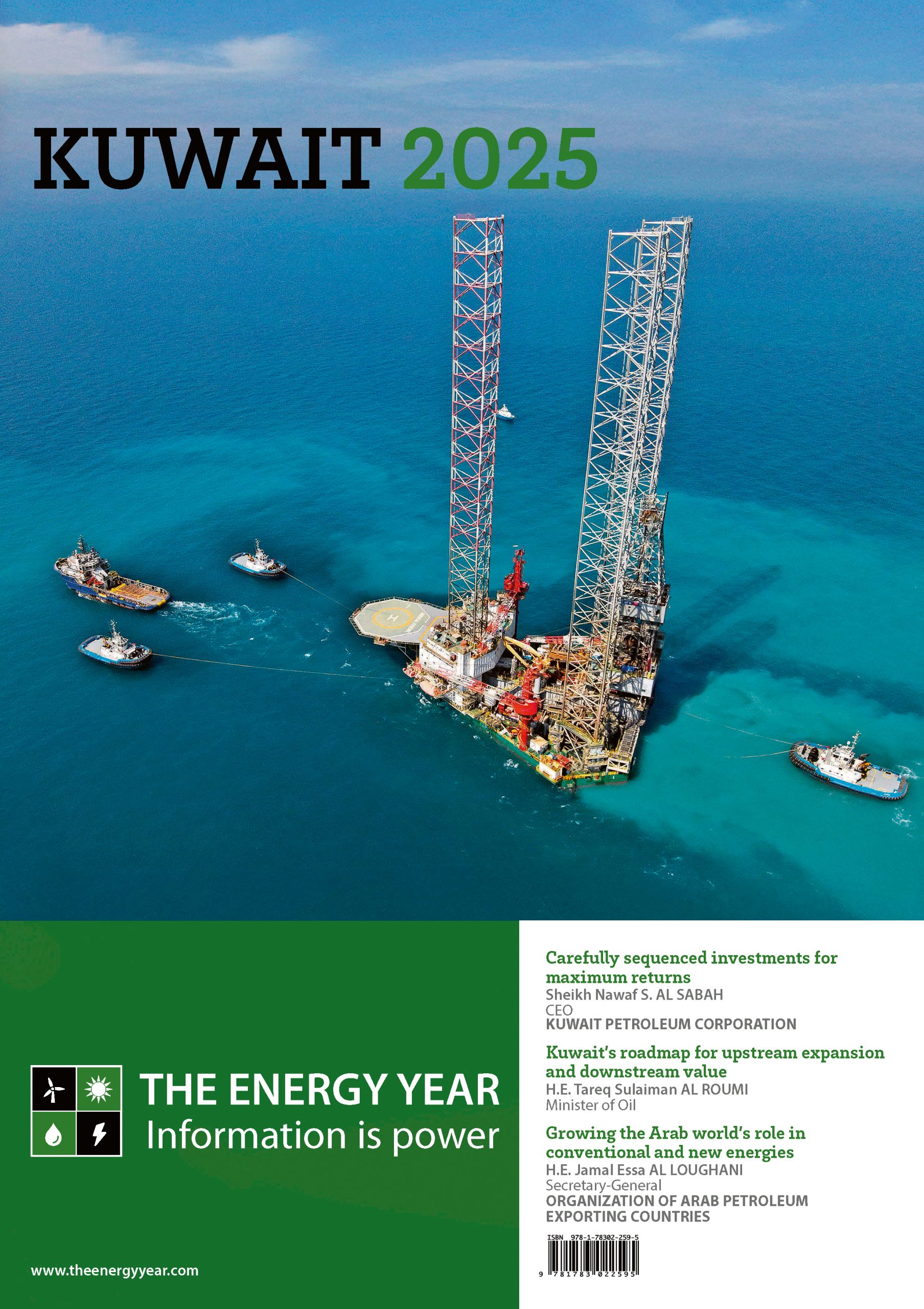
The Energy Year Kuwait 2025
The Energy Year Angola 2025
The Energy Year Nigeria 2025
The Energy Year Saudi Arabia 2025
The Energy Year UAE 2025

