

Offshore developments fuel vessel demand in the UAE
March 7, 2025 UAE
UAE 


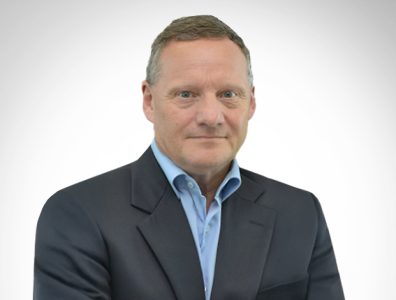
Lars Seistrup, managing director of Albwardy Damen, talks to The Energy Year about the ongoing boom in demand for ship repairs in the UAE and winning market share with specialised services and quality work. Albwardy Damen is a shipbuilding and ship repair company with yards in Dubai, Sharjah and Fujairah.
What is the weight of repair services within your overall volume of business?
Repairs are our biggest business area. We are at a peak activity now and have been for the last three years. The shipping business is cyclical, and although I hope that demand for repairs will keep growing for some time, we know that at some point, it will come down again. As things stand, we expect a couple more years of expansion.
Ship repair is a highly varied business, and there is no single dominant segment. The offshore oil and gas sector, particularly in the UAE and Saudi Arabia, is bringing a significant volume of demand, and we have been benefitting from it over these past years.
Do you expect the demand for newbuildings to grow in 2025?
At the moment, we have demand for a number of different vessel types, and we expect to see more. Whether or not the overall market is growing is a different story, but we expect our business to see some growth.
We primarily build commercial vessels, but we are starting to expand into grey vessels, meaning those for the navy and the coast guard. We expect to see more of those projects in the coming years. Our main source of demand will most probably continue to be the Gulf, primarily the UAE, but we also expect more to come from East Africa. Two years ago, we delivered our first vessel to the Nigerian Navy.
Albwardy Damen recently opened a new workshop facility. How do you expect it will improve your offerings?
Our second workshop in Dubai Maritime City will focus on specialised services. We are trying to give a broader offering through insourcing, rather than outsourcing. If we offer the services ourselves, we are in a better position to control the value chain and the quality we deliver, which is our main differentiator. We may not be the cheapest yard, but we do not accept anybody being better than us in terms of quality.
What do you find most exciting about the prospects for the shipbuilding and ship repair segments in the Middle East, particularly in the UAE?
The UAE has been a maritime hub for the Middle East and parts of East Africa for many years. It still is, as all the main players are interested in having representation here.
We see Saudi Arabia trying to work itself into the picture, but that’s going to take some time because it is still a challenge to work in Saudi Arabia. We continue to see improvements, and even though stumbling blocks remain, there is no doubt that Saudi will try to catch up in the coming years.
That said, Saudi Arabia is building what might be the biggest shipyard in the world, so things might change sooner than expected. The UAE needs to continue developing its maritime industry to maintain its position as a Middle East hub.
How important are sustainability considerations in the construction of new vessels?
In the Middle East, there is a lack of regulation to drive the adoption of sustainable practices in the shipping industry. Unlike in Europe, companies can still operate old vessels, and there is a tendency to opt for the cheapest solutions and avoid the higher costs of sustainable options.
For instance, a 100% electric tug is twice as expensive as a diesel one, making it practically impossible for private operators to recover that investment. We have seen some demand for conversions to hybrid propulsion, but most of the feedback from the operators we work with indicates a low interest in expensive sustainable options for the time being.
However, a shift towards greater sustainability is inevitable. The global industry is moving towards more sustainable vessels, and this will bring major changes. One of the challenges is determining what the future fuel will be. There is currently no clear answer. Methanol, ammonia and even nuclear power are being explored, but it is still uncertain which one will be more broadly adopted. Different solutions may emerge for large container vessels and smaller ships. There will be exciting opportunities and challenges in the industry in the years to come.
How do you expect the competitive environment will evolve within your sector in the UAE?
Competition in the UAE is very high, especially on the repair side, because the barriers to entering the business are low. We compete on quality and safety and by working to high standards.
Our competition for repair work is mostly from local companies, but in the newbuilding market, competition is international. In our vessel class, we compete with Europe, especially Turkey, and with Asia. We cannot compete with China on price; we need to offer more sophisticated services and higher quality.
What is your backlog for 2025?
Our typical backlog for repairs is 3-4 weeks. For newbuildings, we know that we will be busy in 2025. At the moment, we have 34 vessels on contract, which is quite high, but since we have expanded our capacity, we are still able to take on a few more. The majority of our newbuilding orders are from Damen, not from the end customer directly. Damen signs the contracts, and we build the vessels here.
What are your expansion plans for the next few years?
As a company, we have the potential and appetite to expand, but the UAE market is quite saturated with limited options to grow. We do, however, monitor the market both within the UAE and the region for opportunities.
Read our latest insights on:
-

How the UAE is building its future
INTERVIEW -

-

More content from UAE
Latest news and features






Latest Reports


The Energy Year Oman 2026
The Energy Year Kuwait 2025
The Energy Year Angola 2025
The Energy Year Nigeria 2025
The Energy Year Saudi Arabia 2025
The Energy Year UAE 2025

