

Equipment for Saudi Arabia’s energy transition
January 2, 2025 Saudi Arabia


Hussain Adel, CEO of TIEPCO, talks to The Energy Year about the surge in equipment demand being driven by Saudi Arabia’s renewable energy goals and how TIEPCO is adjusting its offer of products and services to meet the needs of the country’s new power generation projects. TIEPCO manufactures switchgear and other electrical equipment for power utilities and industrial companies.
How has the demand for your products been impacted by trends in energy markets?
Demand for our products has surged in recent years driven by several factors, including a significant uptick in infrastructure and renewable energy projects. One of the catalysts is the Vision 2030 initiative, which is transforming Saudi Arabia’s energy sector.
Major developments such as NEOM and The Red Sea, and other mega-projects, are driving demand for new and upgraded electrical infrastructure, which in turn increases the demand for products such as smart RMUs [ring main units] and protection systems.
The government’s ambitious renewable energy goals are expected to further accelerate this demand. Saudi Arabia aims to have 50% of its electricity generated from renewable sources by 2030, which will require constructing multiple renewable energy plants. As these projects start to come online, our smart protection systems can ensure that their power is safely and efficiently fed to the national grid.
What offerings have you added to your portfolio in recent years?
We have made strategic adjustments to our product portfolio to meet the requirements of the market and to evolve along with industry trends. Initially, our focus was largely on switchgear, but recently, we have shifted to offer more protection systems and we are approved up to 380 kV, which is highest in Saudi Arabia.
The shift has included the development of advanced protection solutions for renewable energy integration, such as smart RMUs designed to offer better monitoring and control, and greater efficiency and reliability. Diversification has allowed us to cater to both traditional power grids, smart grids and emerging renewable energy infrastructure, which is seeing exponential growth in Saudi Arabia.
We continue to innovate around RMUs because protecting electrical circuits will become increasingly important as demand for renewables grows. In the coming years, protection systems will become essential for Saudi Arabia’s energy transition efforts.
Has TIEPCO formed any new product partnerships, and how have they reinforced your offerings?
We have partnered with a select group of industry leaders to strengthen our capabilities and expand our product offering. Most notably, we’ve established a collaboration with Schneider Electric, a global leader in energy management and automation, to provide smart RMUs and protection systems to the Saudi Electricity Company.
In addition, we’ve formed a strong partnership with XJ Electric Corporation, a Chinese manufacturer known for its high-quality protection solutions. This partnership has brought us protection technologies that complement our locally produced solutions. By combining our local expertise in manufacturing with Schneider’s innovative technology and XJ’s advanced protection systems, we can offer customers a comprehensive range of solutions that meet both domestic and international standards.
How do you compete with companies such as Alfanar and Lucy Switchgear Arabia?
Competition in our segment is intense, and Alfanar and Lucy Switchgear Arabia are currently the market leaders. We differentiate ourselves through our diversified portfolio. Unlike some of our competitors who focus primarily on a single product line, we offer a combination of manufacturing and services, including installations and after-sales support. Last but not least, our service team is capable of handling a range of different electrical product manufacturers.
Our flexibility and ability to adapt to market shifts, such as the ongoing surge in renewable energy projects, gives us a competitive edge. We are able to offer tailored solutions that integrate seamlessly with renewable energy infrastructure. For example, in addition to protecting the grid, our smart RMUs also enhance grid management capabilities. Our innovations, combined with our ability to scale operations and provide local support, set us apart from other market leaders.
What are your revenue and geographical expansion goals for the coming years?
We are targeting significant growth in the coming years. Our goal is to achieve revenues in the range of SAR 100 million-200 million [USD 27 million-54 million] within the next few years. The target is based on the rising demand for our products and services and our ongoing efforts to expand our production capacity. We are confident that by increasing the scale of our manufacturing operations and expanding our service offerings, we can meet our revenue targets while maintaining high product quality and customer satisfaction.
We are planning a phased expansion of our production capabilities, scaling up from 100 units per month to 250 units per month in the near future. This will require expanding our current facilities and potentially exploring new factory locations. However, we want to avoid drastic changes and will focus on sustainable, incremental growth.
Our services segment is becoming increasingly important, and we plan to offer a broader range of them, from installations to long-term maintenance contracts. We want to provide more services to our customers because we predict it will give us a competitive advantage as companies seek more comprehensive solutions. In this context, we will also add more service centres so that we can respond quickly to customer requests across the country.
Read our latest insights on:
More content from Saudi Arabia







Quality seismic decisions for Angola
INTERVIEW
Latest news and features



Latest Reports


The Energy Year Oman 2026
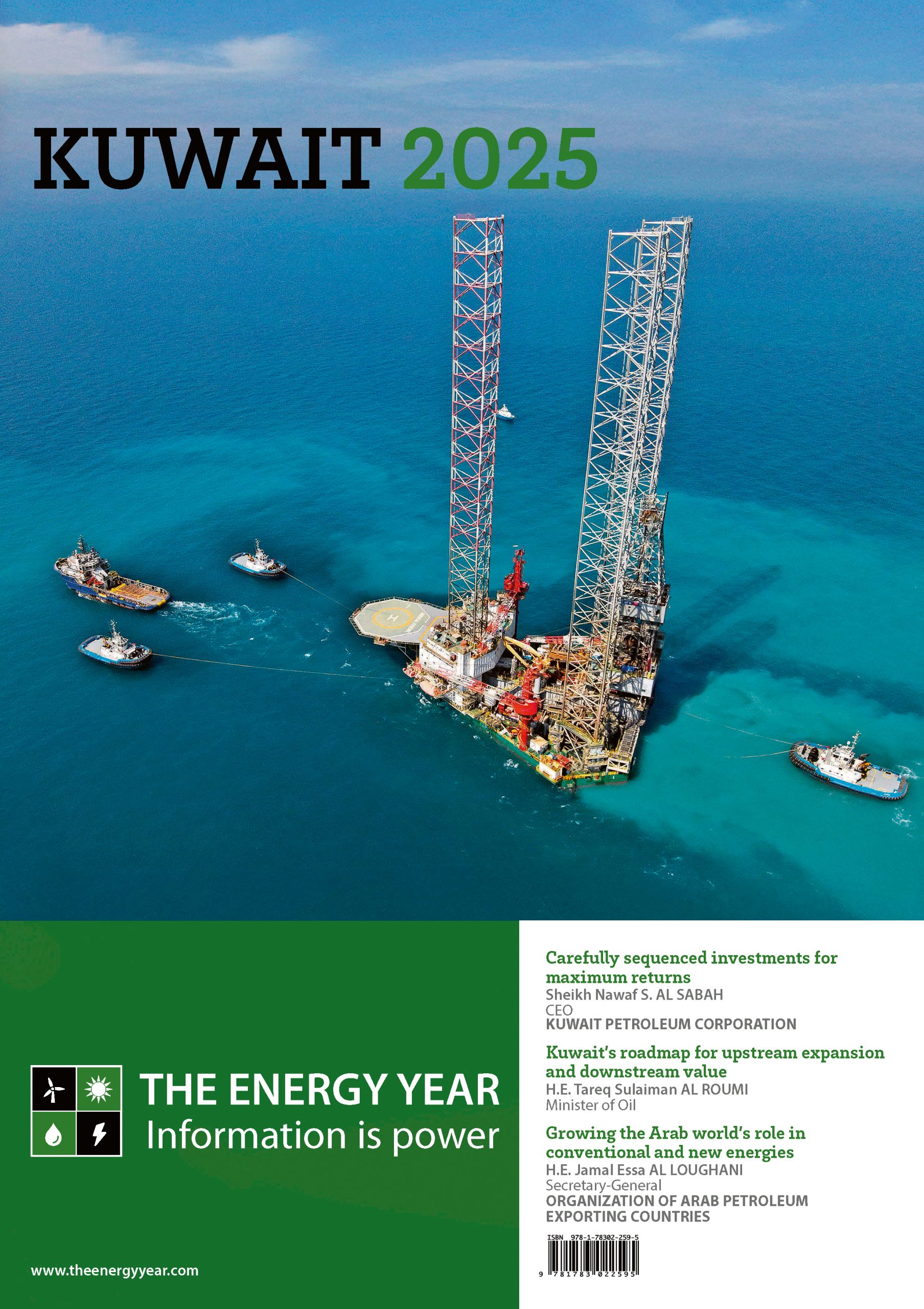
The Energy Year Kuwait 2025
The Energy Year Angola 2025
The Energy Year Nigeria 2025
The Energy Year Saudi Arabia 2025
The Energy Year UAE 2025

