
Eyeing opportunities in Saudi petrochemicals
June 30, 2025 Saudi Arabia


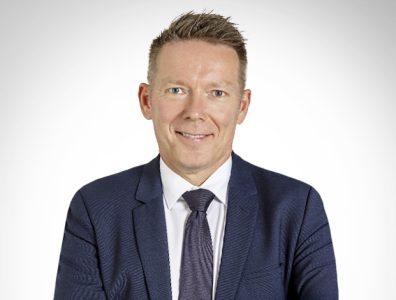
Christian Rugland, president of Bilfinger Middle East, talks to The Energy Year about supporting Saudi Electricity Company’s energy transition targets and the company’s growing turnaround business in the Saudi petrochemicals sector. Bilfinger is an international industrial company that provides consulting, engineering, manufacturing, turnaround and plant expansion and maintenance services.
Where does Bilfinger Middle East operate, and what are your main business segments?
Engineering is at the core of Bilfinger’s offerings, alongside maintenance and technology services. Over the past 50 years in the Middle East, Bilfinger has focused on engineering services for the oil and gas sector, positioning itself as a tier-one engineering provider for leading oil companies. Our engineering operations are centralised in the UAE, from where we serve customers in Saudi Arabia, Egypt, Jordan and the Kurdistan Region of Iraq.
We have engineering projects in public infrastructure, but most of our activity is in oil and gas, where we engage in large-scale upgrades. For example, we are redesigning the tie-in of ADNOC onshore wells to a new digital control system. The upgrade will help optimise production by managing liquid stream variability across the field, improving efficiency and reducing emissions.
What are the company’s growth expectations in Saudi Arabia, and how do you plan to pursue opportunities in that market?
Saudi Arabia is one of our top priorities globally. We see significant opportunities in the Saudi market and aim to conclude a major acquisition there in the next year or two to expand into new industries. Currently, our Saudi operations are predominantly related to utilities and power, and we would like to have greater involvement in oil and gas and petrochemicals. To prepare for this growth, we are working closely with the Saudi government to relocate Bilfinger’s regional headquarters to Saudi Arabia.
What segments of the Saudi oil and gas and petrochemicals sectors are you targeting?
We have been working with SEC [Saudi Electricity Company] for 25 years. They operate close to 50 power stations, and we have recently been working on 15 of them alongside providers of boilers and control systems, servicing electrical instrumentation, conducting inspections and carrying out upgrades and repairs. Additionally, we handle pipeline maintenance within power plants, where miles of tubing and pipelines require servicing.
We aim to support SEC in its energy transition targets by providing technology and insights to optimise their plants, particularly as pertains to water use and emissions. Our work spans the electrical, mechanical and pipeline space and, in the near term, I genuinely believe that the oil and gas and petrochemicals sectors will benefit from services such as the ones we deliver to SEC.
How do you plan to apply your European turnaround expertise to petrochemical plants in Saudi Arabia?
We deploy staff from Europe for turnaround projects in the Middle East. Turnaround services are very much needed in Saudi Arabia, as many industrial plants are dated. Between Jubail and Al Khobar, there are around 30 petrochemical plants with ageing assets, which is a significant opportunity for us.
By bringing our turnaround experience from Europe to Saudi Arabia, we can offer valuable insights and technology and grow our business. In 2025, we will be working with Borouge, a JV between Borealis and ADNOC, on a turnaround in Ruwais.
Are you participating in any midstream or downstream green hydrogen projects?
In the hydrogen segment, we have done work on the infrastructure side as engineering and management consultants. We conduct feasibility studies and detailed engineering, in preparation for others to take on the construction phase. We are not building huge solar plants for green hydrogen, nor are we involved in large-scale water electrolysis, our focus is on electrical instrumentation and downstream infrastructure.
What are some takeaways from your work on carbon capture with ADNOC?
We have carried out several carbon capture studies. In Abu Dhabi, ADNOC asked us to evaluate the feasibility and commercial viability of capturing carbon from a steel foundry’s furnaces.
We assessed the possibility of laying a 42-kilometre pipeline to an onshore field and improving oil recovery by injecting carbon dioxide into the reservoir. Carbon dioxide increases the viscosity and mobility of oil, making it easier to extract, and we can create a circular process by injecting carbon dioxide underground at the end of its lifecycle.
While many current CCUS projects focus on increasing oil production, those in this region are generally more cost-effective and environmentally friendly compared to other parts of the world. We can help our customers obtain the benefits that have been proven by our studies.
How do you see yourselves supporting Saudi giga-projects such as NEOM?
Given our size, we cannot develop projects such as NEOM and The Line ourselves. However, we believe our expertise as subcontractors and technology service providers can be of value, and we are teaming up with other companies to provide full packages. We expect that fuel manufacturing premises, water desalination plants and hydrogen infrastructure will be our entry points into Saudi giga-projects.
How does your expansion strategy in Saudi Arabia and neighbouring markets fit into Bilfinger’s growth objectives in energy and infrastructure?
Our strategy is to focus on growing industries within countries where we already provide power and utility services, such as Saudi Arabia. First, we aim to grow within the energy industry, including the oil and gas midstream and downstream. The second part of our strategy is geographical expansion.
For example, in Saudi Arabia, we currently do not do much engineering, but we see an opportunity to leverage the skills and capabilities within our Group for the benefit of Saudi customers. In Oman, where we have carried out projects in the past, we have key accounts, such as Shell, that want us to provide services. Other countries we are monitoring for potential entry include Iraq and Afghanistan, where infrastructure rebuilding efforts are underway.
Read our latest insights on:
More content from Saudi Arabia




Quality seismic decisions for Angola
INTERVIEW
Latest news and features



Latest Reports


The Energy Year Oman 2026
The Energy Year Kuwait 2025
The Energy Year Angola 2025
The Energy Year Nigeria 2025
The Energy Year Saudi Arabia 2025
The Energy Year UAE 2025

