
Focused on making Nigeria energy-secure
September 3, 2025 Nigeria


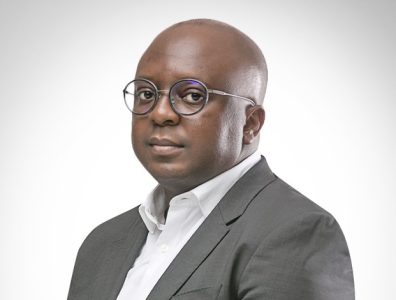
Abiodun Oshodi, managing director of ILF Consulting Engineers in Nigeria, talks to The Energy Year about the company’s involvement in renewables and power projects in Nigeria. ILF Consulting Engineers in Nigeria is an international engineering and consulting firm delivering infrastructure, energy and climate protection, resource and sustainability, water and environmental projects.
Can you provide us with an overview of ILF’s footprint in Nigeria and its key points of focus in the country?
The focus of the ILF Group in Nigeria is to further diversify our business areas while still maintaining a presence in the oil and gas sector. Of course, the oil and gas sector will still make up a large volume of our activities in Nigeria. At the Group level, the sector represents approximately 30% of our revenue.
In Nigeria, however, it represents 95% of our turnover, which has driven us to take active steps towards deepening our diversification efforts. We would like to keep the revenue that oil and gas contributes while also increasing our sustainability-oriented portfolio.
In Nigeria, for instance, we are looking at the development of solar, wind and hydro projects. Hydro has very good potential, as the country has vast water resources.
However, we acknowledge that energy security is critical to industrialising the African continent and recognise the importance of a gradual and just energy transition, and that is why we are involved in several gas pipeline undertakings, such as the AKK [Ajaokuta-Kaduna-Kano] pipeline and the Nigeria-Morocco pipeline, the latter which is now part of the USD 26-billion African-Atlantic Gas Pipeline project, along with the West African Gas Pipeline Extension Project.
We want to be a key player in fostering Nigeria’s sustainability agenda by supporting the government with consultancy services, as well as supporting developers and contractors with our engineering resources and expertise.
We are definitely seeing significant improvements in terms of opportunities. We have witnessed more opportunities in 2024 than in the previous eight years, stemming from a better domestic macroeconomic situation driven by an FG [federal government] that is more proactive in supporting private companies with incentives and investments. For example, this is the case for the Asiko LPG Terminal, which is funded through the Midstream and Downstream Gas Infrastructure Fund.
We play a large role supporting NNPC in different projects, but our main strength is with the private sector, namely private investors who are trying to gather funds from outside Nigeria and participate in downstream projects that need a strong consulting brand to support them in creating the documents required to receive financing.
Given the uptick in renewables initiatives worldwide, what do you think is needed for renewables projects to fully take off in Nigeria?
I think the challenges we have faced in the past revolve around the government’s understanding of renewables projects. The policies and frameworks are available, but the government has to realise that these initiatives – for example, PV projects in countries such as Saudi Arabia and the UAE – are heavily subsidised. There must be government interest and willingness to fund them, and this is something we have not yet seen in Nigeria.
In my opinion, there could be private-sector investments to fund these projects, but for many of these, the funding procedures are not streamlined. It is consequently challenging to sell them at profitable market prices, and this is where the government has to step in. This is, for instance, what is happening in Egypt and Morocco, where renewables initiatives are booming.
To put it bluntly, if you want to execute ambitious PV projects, which are much more expensive than gas-fired power plants, and you want to sell them at the same price, then the government’s involvement is crucial.
There are already some initiatives, promoted by the Nigerian Sovereign Investment Authority, as shown by the 10-MW PV Kumbotso Solar Project completed in Kano in 2023, as well as the Energizing Education Programme, which is partly funded by the World Bank.
However, if you really want sustainability to be impactful and want to tackle the problem of energy scarcity that has plagued Nigeria, you need to bring renewables on a large scale, and to do so, the government needs to think outside of the box to help or partner with private firms.
The keys to enabling these projects are collective effort, private-public partnerships and a balanced but effective subsidies scheme. In the last decade, our economy has not done well to attract funds, but as mentioned, now the conditions are getting better, including a strengthening naira. It is still early to say, but the opportunities we are seeing now show that confidence in the economy is increasing compared to a few years ago.
How is ILF supporting the domestic power sector, and what kind of role does the company want to play in this segment?
By signing the Electricity Act in 2023, the Tinubu administration managed to open up the market for more renewables. Although on a small scale and capacity, we are noticing interest in developing more PV projects, and our task is to help our clients – whether public or private developers – with bankable feasibility studies that allow us to find out if these projects can be put on the grid.
Mini-grid solutions are gaining momentum. Even though they are small, they are focused on specific customers, mainly within the manufacturing space. For example, we are currently working on one project where the Kaduna State government is partnering with Konexa for the installation of a 21.9-kW solar mini-grid in the Ruhuni community. These are the kinds of projects we want to be involved in.
First of all, we want to be involved by offering consulting services to ensure that these projects are technically and financially feasible and bankable. Then, we want to support them with FEED services, developing the projects to the point where they can move to the EPC phase. Finally, we want to offer full consulting project management throughout the whole project life cycle.
We are also seeing a lot of interest from financial houses, which want to invest in some projects, and they have asked us to do the due diligence and provide monitoring services. I believe the FG is doing well in making funding available in some cases, namely for gas-to-power and power itself, but we are still lagging behind when it comes to transmission and distribution, and this is where we think more attention should be paid to at the moment.
What is your assessment of oil and gas players’ appetite for decarbonising their operations globally, and how can ILF be a part of this equation?
Let me answer by talking broadly about Africa first and then narrowing it down to Nigeria. We still have a significant energy challenge in Africa. We need cheap and affordable energy, something that is not achievable exclusively with any renewable solution. Nonetheless, the demand for energy is high and keeps rising, spurred by a growing population and middle class. To keep up, we still need to rely on fossil fuels, but at the same time we need to increasingly explore alternative sources.
Now, about Nigeria, there are parts of the government arguing that for Nigeria to become stronger than it was 20 years ago, we have to go back to producing more than 2 million barrels of crude per day, but frankly I think this is just one side of the coin. Nigeria is more gas rich than crude rich, but we are still very far away from exploring and taking advantage of all our gas potential, meaning that we still need the revenues from crude to start turning greener.
Having said that, this should not prevent us from setting realistic targets about how to decarbonise operations in some of our oldest assets. This shift has to be gradual and kick off with what is essential.
For example, companies need to learn how much CO2 they are emitting, and we need to assist them with respect to how to reduce their emissions in the long run without altering their production. Seplat is a case in point for us. We have had several engagements with them on how to help them reduce their carbon footprint.
Overall, there is a greater sensibility now around sustainability, and funding pure oil and gas projects without a sustainability agenda tied to them is becoming relatively harder to see. In this arena, ILF is on the front line. We have internally set our own target to be net zero by 2050 in terms of our operations, and we are constantly updating our offering of carbon abatement strategies for clients.
How important is gas for the country’s development?
I definitely want to see more gas in our energy mix because, let’s face it, Nigeria’s problem is not just access to energy. It is how to further industrialise, and these two elements run in parallel. Methanol, LNG, LPG and CNG initiatives need to ensure that the average Nigerian home can count on gas rather than firewood, but its use should not be limited to households.
I will give you a day-to-day example. A lot of the cracking of rice crops in the north of the country is still done with firewood, meaning that you have to cut trees. Furthermore, it takes about a day for the firewood to reach the right temperature to crack the rice. With gas, you can do it in one hour. This gives you a taste of the untapped potential gas has in every form and how we still have not tackled its entire supply chain, as we’re currently focused mainly on gas-to-power.
In other words, we need to find projects that use gas for ammonia, methanol and fertiliser plants. Nigeria is slowly moving ahead. Indorama’s expansion is a successful example, but it is crucial to take action and step up the volume of these undertakings. The potential is there.
What is ILF Nigeria’s involvement in midstream activities, and what opportunities do you see ahead for both the country and the company?
AKK is our biggest project at the moment. We have almost completed the main line section, and then we will start working on the terminal stations, which will allow the pipeline to branch out to the major cities.
There are also some other interesting projects in the midstream space, such as the Trans-Saharan gas pipeline, which is challenging for security reasons more than economic ones, and then the Nigeria-Morocco pipeline, which will see Nigeria play a major role in ensuring that the pipeline starts running and is profitable. We will have to start looking at the gas feedstock for that project.
Overall, we are seeing an increasing number of companies interested in the area of gas distribution in Nigeria and beyond. In this regard, we are working on projects in Ghana, while exploring opportunities in Benin.
The bottom line is that the regional midstream market is moving, and now with the Dangote Refinery having started distribution, there are more in-depth conversations about using the existing infrastructure within Nigeria to evacuate the finished products and make them more accessible for the domestic and regional market.
When the refinery is integrated into the entire existing NNPC midstream infrastructure without the need for trucking every litre of petrol, diesel and aviation fuel from the refinery, we will begin to experience positive movements in prices as well, mitigating some of the socioeconomic problems the country is experiencing.
NNPC is already looking to bring in private-sector players to improve the functionality of the infrastructure, in addition to rehabilitating all the state refineries. These will further create – together with the Dangote Refinery – the opportunity for Nigeria to become a net producer of refined products that we can then export.
We have terminals and pipelines in Nigeria that were built in the 1970s and 1980s that have performed below capacity or are rotting away. We should capitalise on them, making made-in-Nigeria energy products more accessible within and beyond the country’s borders. The key is to start thinking forward, not thinking how to catch up.
Read our latest insights on:
-

-

A new opening for African gas
INTERVIEW -

More content from Nigeria


Quality seismic decisions for Angola
INTERVIEW
Latest news and features



Latest Reports


The Energy Year Oman 2026
The Energy Year Kuwait 2025
The Energy Year Angola 2025
The Energy Year Nigeria 2025
The Energy Year Saudi Arabia 2025
The Energy Year UAE 2025

