

From oilfield services to geothermal and renewables
July 14, 2025 Saudi Arabia


Rayed Eskandrani, vice-president of Northern Middle East at TAQA Well Solutions, talks to The Energy Year about developing rotary steerable systems specifically for the conditions found in Saudi reservoirs and using AI to utilise drilling data to its full potential. TAQA Well Solutions is an international provider of drilling, well completions and intervention services.
This interview is featured in The Energy Year Saudi Arabia 2025
What are TAQA’s key priorities in Saudi Arabia and the region, and what are the company’s goals for the future?
While we have historically been involved in the midstream and downstream segments, our primary focus has been on oilfield services. In recent years, we have reshaped our strategy, as the changing energy landscape now requires us to tackle oil extraction more sustainably, safely and with less carbon impact.
Our core business will remain in oilfield services, but we are also investing in renewables, with a focus on geothermal energy. Additionally, we are looking at the mining sector through our ARGAS subsidiary and exploring other opportunities.
How important is Saudi Arabia for TAQA’s operations, and do you plan to expand beyond the Saudi border?
Saudi Arabia is the most important market for us, and it remains at the core of our operations. However, working with Aramco across various oilfield services segments positions us to expand internationally. For example, our geothermal experience in Turkey gives us credibility in other markets, and our offshore work in the Gulf enhances our reputation with clients such as Eni.
While Saudi Arabia remains our core market, we have expanded in the MENA region organically and inorganically over the past few years. Our integrated portfolio of end-to-end services – from seismic studies to drilling and well delivery – allows us to provide comprehensive solutions and grow globally.
What is your assessment of the competitive environment in Saudi Arabia and other markets you are trying to enter?
The competition in Saudi Arabia is very high, given the size of Aramco’s operations and the scale of the reservoirs here. However, the competition is also somewhat limited because to operate with Aramco, companies must meet strict standards. You need to demonstrate high levels of safety, a track record and risk management capabilities.
How does TAQA differentiate itself from other competitors in the market?
While companies such as SLB, Baker Hughes and Halliburton are much larger and have more capabilities, TAQA’s advantage lies in being an agile Saudi company with quick decision making. Our technologies, R&D and assets are tailored to the domestic market, unlike companies that develop products for North America and try to adapt them here.
We focus on addressing the specific needs of Saudi Arabia and the surrounding region. Once we meet the needs of the Saudi market, our offerings can be applied across the broader MENA region, where the geological conditions and drilling practices are similar.
Can you tell us about any new technologies that TAQA has developed recently?
We have developed a proprietary RSS [rotary steerable system]. The technology isn’t new; most of the big companies already have theirs, but ours is built from scratch specifically for the Saudi market. It took significant time and effort, and we are still in the testing phase. It is designed for local conditions – high temperatures, rough terrain and unique drilling requirements. This custom-built tool is something no other company offers.
On the completions and interventions side, we acquired a Norwegian company called Target Intervention, with whom we developed three very unique products. One is the Explorer, which allows real-time visibility of the bottom hole assembly in coil tubing applications. It has been highly successful in Saudi Arabia’s gasfields, and one of the big four international oilfield services companies is interested in it.
Another tool is Discovery, which is an intelligent downhole tool for well testing. This downhole testing tool can be run under a coiled tubing string to perform pressure build-up tests. We have also developed the Challenger straddle, which allows precise downhole selective isolation operations with a click – something that traditional hydraulic tools can’t achieve. Both products are one-of-a-kind in the market.
In 2024, TAQA signed an agreement with WellsX. How do you see the role of AI evolving in oilfield services and drilling operations, and how is TAQA incorporating these technologies?
If there is something we don’t do well as an industry, it’s making full use of the data we capture. The amount of data we gather is huge, but how often do we use it to its full potential? Not very often. If you were to analyse it manually, you would get overwhelmed. Saudi Arabia alone drills more than 1,000 wells a year.
This is where AI and machine learning come in. With AI, you can run an algorithm that analyses all that data, spotting trends and patterns that humans would miss. At TAQA, we have already started using AI in collaboration with WellsX. One use case is designing cement recipes. It used to take us about three days to design a recipe for each well, considering variables such as depth, temperature and rock type. With AI, we can do it in just 20 minutes. The efficiency increase is massive.
Beyond that, AI can carry out predictive maintenance, helping us monitor tools and equipment in real time. It can tell us when something needs attention, allowing for better resource allocation and reducing unnecessary maintenance. It’s like changing the oil in a car only when it’s truly necessary, based on actual conditions, not just mileage.
What must a company have to be considered a partner of choice for TAQA?
Within the oilfield services sector in Saudi Arabia, we are covered and have our portfolio in place. However, when we operate in other countries where our service offerings may be more limited, we look for partnerships to fill those gaps. For example, in Egypt, where we are mainly providing wireline and testing, if someone offers to collaborate on drilling fluids or cementing, we would be open to it. We aim to elevate our industry by sharing assets, just as airlines share planes to improve efficiency.
We are always on the lookout for companies that bring innovations, even if they are smaller players. If their technology brings value to us or our clients, we will be interested in collaborating. That’s how most of our acquisitions happen. We begin by working together, and then we move forward with joint ventures or acquisitions, as we did with ARGAS.
How do you envision Saudi Arabia evolving in the next few years, and how do you see TAQA evolving within the country?
This question was asked to H.H. Crown Prince Mohammed bin Salman, and he replied, “After Vision 2030, there is Vision 2040.” The vision keeps evolving. By then, Saudi will be competing on a global level.
At TAQA, we are focused on the long term. It is widely recognised that Saudi Arabia has oil reserves for at least another 100-200 years. As we become more efficient and discover new fields, the oil industry will remain strong. Our mission is to provide energy in the safest, most reliable and consistent way.
We are committed to Saudi Arabia and the surrounding region, which shares a similar geology, culture and supplier ecosystem. We want TAQA to be the partner of choice for any operator looking to venture into the region. With the right leadership and support from key stakeholders such as PIF and Aramco, I believe we have a strong foundation for a bright future.
Read our latest insights on:
More content from Saudi Arabia





Quality seismic decisions for Angola
INTERVIEW
Latest news and features



Latest Reports


The Energy Year Oman 2026
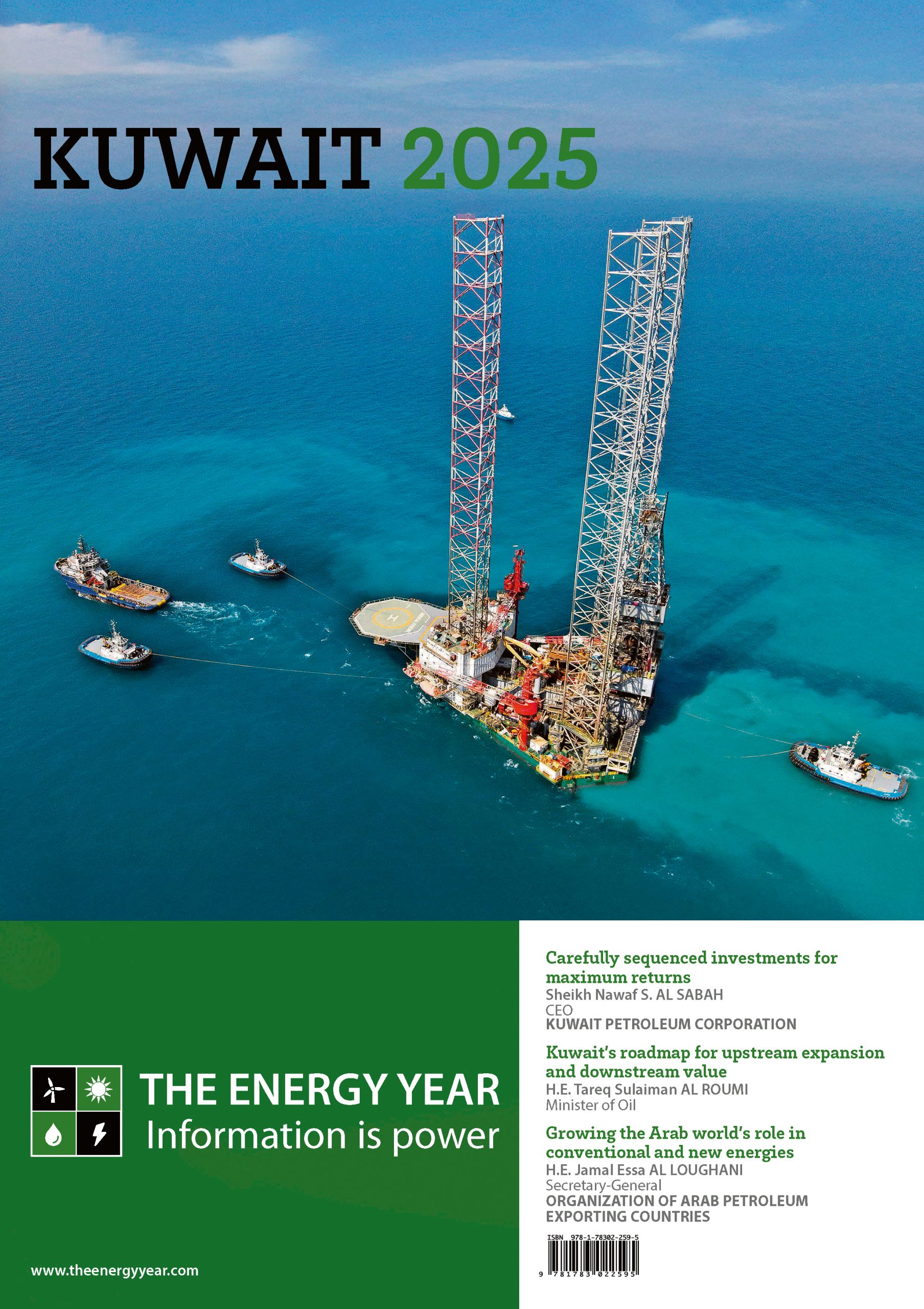
The Energy Year Kuwait 2025
The Energy Year Angola 2025
The Energy Year Nigeria 2025
The Energy Year Saudi Arabia 2025
The Energy Year UAE 2025

