
How to unlock value from hard-to-recycle waste
November 21, 2024 UAE
UAE 


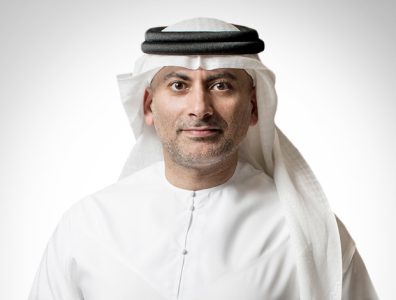
Khaled Al Huraimel, Group CEO and vice-chairman of BEEAH, talks to The Energy Year about the Group’s success in converting waste to energy in the UAE and the Middle East and its plans to build the world’s first large-scale waste-to-hydrogen plant. BEEAH offers a range of services in the environmental management, energy, technology, real estate and healthcare sectors.
How did BEEAH start operations with the Emirates Waste to Energy Company?
The group was formed in 2007 to tackle the environmental challenges that Sharjah and the UAE were facing. Today, BEEAH has become an international holding group and the largest fully integrated waste management company in the UAE and the Middle East.
Our entry into the waste-to-energy segment came after steadily building our integrated waste processing and recycling facilities, where we continue to maximise material recovery, produce recyclables and contribute to the circular economy. However, we saw that we were only able to reach around 76% landfill diversion. We wanted to explore how to unlock energy value from hard-to-recycle waste.
In 2017, we formed a JV with Masdar, the Emirates Waste to Energy Company, to build the Sharjah Waste to Energy plant. The plant has been operating for the past two years, supplying 30 MW of power to the Sharjah Electricity, Water and Gas Authority. After the success of this plant, we are now working on other waste-to-energy projects in the UAE and internationally that are still in development but will be announced soon.
With the addition of the Sharjah Waste to Energy plant, our diversion rate went from 76% to over 90% in Sharjah, which is one of the highest in the world. This means that, at most, only 10% of waste ends up in landfills in Sharjah. As we aim for zero waste going to landfills, we are working to repurpose old landfills into solar farms, which could produce up to 120 MW of power.
How important do you expect waste-to-hydrogen will be in the coming years?
We have been researching the conversion of waste to energy for many years and, after a successful pilot plant in the UK with Chinook Hydrogen, we announced in COP28 UAE that we will be building the first large-scale commercial plant to convert waste to hydrogen in the world. We expect construction to start in 2025.
We expect the demand for hydrogen to increase in the coming years and the returns from waste-to-hydrogen as well. Waste-to-hydrogen will generate hydrogen at a very competitive cost, making it a very attractive option which might not have been considered before by governments seeking to achieve hydrogen targets.
Many cities around the world are diverting waste away from landfills to generate clean energy, but nobody has looked into producing hydrogen due to the lack of large-scale technology. After we build our plant, we expect a large increase in demand for our technology, which BEEAH has been investing in for several years.
What role do technology partnerships play in waste-to-energy projects?
We operate mostly through partnerships. The first waste-to-energy plant in the Middle East, which we built, was a partnership. The model has been successful for us, and we hope to keep replicating it in the future. We don’t believe we can be an expert in everything, but we feel we can be the right partner and enabler to achieve specific targets with the right global organisation.
In waste management, we also have international partnerships with Veolia from France, Polygreen from Greece, and Ambienthesis from Italy. We have also formed a joint venture with Khazna, called Khazna Sharjah, to build data centres across Sharjah. Together, we are looking to build sustainable data centres powered by renewable energy sources, such as waste-to-energy, across the emirate.
We are also looking to expand geographically with strong partners. We are exploring the whole GCC and North Africa region, but Saudi Arabia and Egypt are our focus in the short term for waste management and waste-to-energy. We hope to achieve growth through PPPs. We were formed as a PPP, and we have replicated the model in Saudi Arabia and Egypt.
In Saudi Arabia, we started managing waste for Medina city right before the Covid-19 pandemic, and have now formed a three-way partnership with the Saudi Investment Recycling Company and Al Mqr, the investment arm of the Medina municipality, to manage the city’s waste. In Egypt, we replicated the model by forming a JV with the government of the New Administrative Capital being built on the outskirts of Cairo to accommodate 6 million people. Our target is to establish a fully integrated waste management company that will achieve at least 80% waste diversion, similar to what we have done in Sharjah.
How is BEEAH incorporating AI into its operations?
The UAE is a centre of excellence for research and development, and we will not stop once we reach zero waste. We will study how to continue extracting value from waste. We are looking into material science and are working with the Sharjah Research Technology and Innovation Park. It is fundamental to spend more on R&D to continue innovating.
We have been investing in AI for many years, long before ChatGPT arrived. We designed the BEEAH headquarters to be the first building in the Middle East to fully integrate AI. We worked with Johnson Controls and Microsoft to develop hundreds of AI use cases for visitors, staff and the building management system.
In one of our recycling plants for commercial and industrial waste, we have a robot that utilises AI and visual recognition to identify and segregate specific materials. We have also installed cameras in our fleet for waste collection and street cleaning that collect data and capture on-the-ground scenarios during operations on the streets. We are alerted automatically in cases such as litter on roads and if bins are overflowing so that we can adapt services dynamically. We have also established a task force within the Group to determine how we can further integrate AI and maintain our competitiveness in the market.
Read our latest insights on:
-

How the UAE is building its future
INTERVIEW -

-

More content from UAE


Quality seismic decisions for Angola
INTERVIEW
Latest news and features



Latest Reports


The Energy Year Oman 2026
The Energy Year Kuwait 2025
The Energy Year Angola 2025
The Energy Year Nigeria 2025
The Energy Year Saudi Arabia 2025
The Energy Year UAE 2025

