

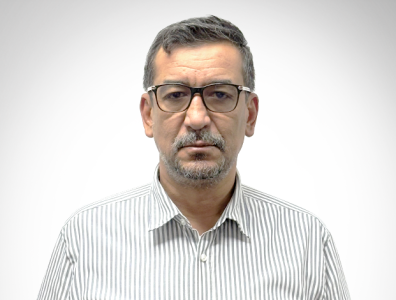
No shortage of work for Saudi Arabia’s top logistics players
February 20, 2025 Saudi Arabia


Aleksander Markovic, CEO of RS Lanes, talks to The Energy Year about how government projects are driving a boom in demand for logistics services and the company’s ambitious plans to invest in trucks and heavy lifting equipment. RS Lanes is an equipment and logistics services provider specialising in oil and gas.
What are the company’s targets for growth and profitability in 2024?
Our current targets include expanding our fleet by 30-40% within the first quarter of 2025. This is solely to meet the needs of our existing customers, without yet focusing on growing the customer base or diversifying. In 2024, we expect to achieve approximately 25% revenue growth compared to 2023. Our revenue should easily exceed USD 30 million, and net profit should be 40-50% higher than last year.
What investments are you making to strengthen your core operations and reduce your dependency on third-party providers?
Currently, we have more than 200 standard trucks. The expansion we seek, however, is in equipment, which will represent a larger investment that is more connected to our core work and will allow us to rely less on third parties. It will include trucks, heavy-lifting equipment and more. We will invest more than SAR 100 million [USD 27 million], with half going towards trucks and the other half towards lifting equipment.
How are you planning to finance the expansion?
We are seeing more interest in Saudi Arabia from European investors, driven in part by manufacturers who want to bring their products to the Saudi market. We are financially stable, and our investment plans look promising, but after Covid-19, which impacted profitability, no one has vast reserves. If we’re looking to spend USD 30 million on trucks and equipment, we can’t do it in cash. Banks and manufacturers provide us with much support.
What is your assessment of the competitive environment in the domestic market?
In countries as large as Saudi Arabia, the industry is vast. There are not many companies doing what we do here, and given the level of demand, we don’t see each other as competition. Instead, we assist each other with the work that needs to be done, forming partnerships rather than competing.
We don’t chase each other’s business; my competitor helps me execute my projects, just as I do for them. It’s all about teamwork since we all work for the same clients. For example, we have very good relations with other transport and heavy equipment rental companies. There’s enough business for everyone, and we all meet safety and other standards with a perfect track record.
How does RS Lanes approach Saudisation?
We buy everything we can from domestic manufacturers and, when something is only available abroad, from a local agent. Most of our spending stays within the country. We are also guided by the ministry’s Saudisation requirements, which include employing and training Saudi nationals.
While we are fully meeting these requirements, they are challenging because finding Saudi drivers and operators is nearly impossible due to the nature of the work and the country’s size. The ministry understands this, so our Saudisation targets are reasonable.
How does RS Lanes support Aramco, and how do you see this activity evolving?
One of our biggest projects now is handling about 5,000 tonnes per day of sulphur for Aramco, destined for export. The work arose because Aramco’s production has outpaced its capacity for granulating sulphur. Before export, sulphur must be crushed into powder, which not many facilities are willing to do because of environmental concerns.
Aramco has plans to expand its granulation capacity, but it will take about five years. Until then, we will continue moving sulphur for them. Last year, we moved about 2,800 tonnes daily; this year, it’s 5,000 tonnes and rising. They still have 2.2 million tonnes to move, so we plan to increase our workforce for this.
How much of your business is related to oil and gas?
Oil and gas is one of our core markets, and it will continue to be so for the foreseeable future. Commodities exports make up about 60% of our business, with the rest coming from rig moves and supply deliveries. We plan to grow our rig division over the next eight months, increasing our personnel and equipment. Once that’s done, we will shift focus to other revenue streams, such as standard transportation. Those services only account for around 10-15% of our revenue and they are not a core focus – it’s more of a value-added service we offer customers.
Demand is strong industry-wide, driven by government initiatives, and there is no shortage of work. Overall, we expect our business to quadruple over the next five years. We aim to have 1,000 trucks and 1,500 employees. Investment risk is practically non-existent – there’s no expectation that the momentum will slow anytime soon.
Read our latest insights on:
More content from Saudi Arabia







Quality seismic decisions for Angola
INTERVIEW
Latest news and features



Latest Reports


The Energy Year Oman 2026
The Energy Year Kuwait 2025
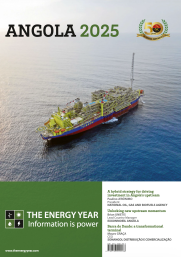
The Energy Year Angola 2025
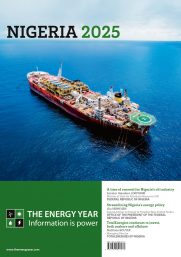
The Energy Year Nigeria 2025
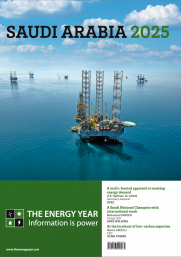
The Energy Year Saudi Arabia 2025
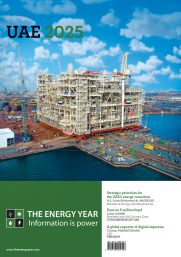
The Energy Year UAE 2025

