Saudi industrial motors that power the Middle East
August 27, 2025 Saudi Arabia


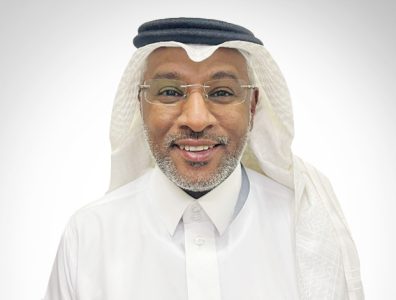
Saad Al Arfaj, managing director of Middle East Electrical Motors Factory (MEEM), talks to The Energy Year about diversifying production into specialised motor classes and the advantages of becoming the only 100% Saudi-owned motor manufacturer. MEEM manufactures low-, medium- and high-voltage electrical motors for industrial customers across the Middle East.
Could you tell us the story behind your rebranding to MEEM?
Our rebranding from TME to MEEM reflects a commitment to development and innovation. Following a discussion of strategic priorities with TECO, our partner in TME, the Saudi side of the company acquired TECO’s shares, making the company entirely Saudi-owned. While TECO is no longer a shareholder, it continues to serve as the technology licenser, ensuring that MEEM retains access to its expertise as it embarks on this new phase of growth.
We changed our name to Middle East Electrical Motors Factory, but our goals also lie outside the Middle East. It is well-known in Saudi Arabia and the GCC that Saudi-made products are of high quality, and we believe that we can be an international reference in the motors business.
What are the main benefits of being a Saudi brand?
We remain the only motor manufacturer that is 100% Saudi. Being Saudi gives us the flexibility to pursue development initiatives freely to meet market demand. Since we manufacture locally, we can deliver up to 15 days ahead of everyone else, which is a significant advantage. Other suppliers typically take around 54–56 weeks to deliver on such projects, but we were able to reduce the timeline because we manufacture locally.
Furthermore, being a Saudi company enhances our reputation and is a marketing advantage for trade and sales in the region. It also ensures we receive government support for domestic manufacturing. We are proud to be included in the Local Content & Government Procurement Authority’s list of manufacturers, which allows us to play a role in supporting national objectives.
Can you comment on some projects you have recently completed?
More than 30% of our engineers are certified vibration engineers, and we have a special development path for selected engineers to become experts in disciplines such as electrical design, mechanical engineering, field service and vibration analysis.
This has allowed us to deliver on projects such as the 10,000-hp motor driving the gas compressors at a battery gas plant in Saudi Arabia. That was a MEEM motor. We also have an order for six units for Aramco’s Fadhili Gas Plant, which will be connected to a Siemens Energy compressor. With 9,300 hp and 13.2 KW, the motors are massive.
After delivering all the motors for Jafurah Phase 1, we are currently working on Phase 2 and expect to receive the contract for Phase 3. Additionally, we supplied motors for the Marjan project and the South Ghawar gasfield development, completing deliveries last year. This represents a significant share of Aramco’s motor requirements.
How are demand trends influencing your priorities at the moment?
Most of our demand comes from the oil and gas sector, and we anticipate this will remain the case for as long as oil continues to be a vital resource. The second-largest source of demand is the water sector. Together, these verticals account for approximately 80% of the domestic market’s motor requirements. The remaining 20% is distributed among petrochemicals, power and other industrial segments such as mining and cement production.
This breakdown guides our approach. We prioritise oil and gas and water while remaining versatile to support other industries as well. Aramco and the Saudi Electricity Company are among our main clients. Others are cement companies, desalination plants and petrochemicals companies, and we see great potential for our traction motors as Saudi Arabia expands its rail and metro networks.
How does your growth strategy address innovation and diversification?
Part of our growth strategy involves exploring specialised motor categories. We plan to begin manufacturing traction and slip-ring motors in mid-2025, synchronous motors in 2027, and drives by 2028. We are finalising a partnership agreement with a technology provider to bring these innovations to market. So far, we have invested around USD 45 million in these new product lines and expect to invest an additional USD 20 million in adjustments to our manufacturing and other necessary advancements.
As part of our development, we are exploring new applications for our motors. Within two years, we expect to have a 500-hp motor specifically for firefighting, and we are also working on explosion-proof motors capable of operating in Class I, Division 1 environments, which are the most hazardous.
Read our latest insights on:
More content from Saudi Arabia







Quality seismic decisions for Angola
INTERVIEW
Latest news and features



Latest Reports


The Energy Year Oman 2026
The Energy Year Kuwait 2025
The Energy Year Angola 2025
The Energy Year Nigeria 2025
The Energy Year Saudi Arabia 2025
The Energy Year UAE 2025

