
Technology for the Gulf’s renewable energy boom
January 28, 2025 UAE
UAE 


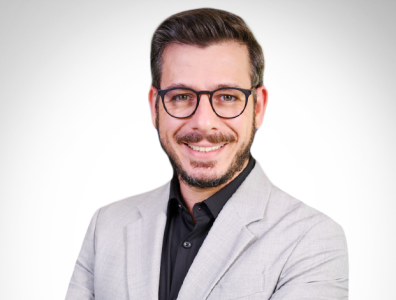
Tomaz Guadagnin, managing director of Flexible Generation and Retail AMEA and country manager of the GCC and Pakistan for ENGIE, talks to The Energy Year about bringing renewable energy and decarbonisation solutions to the GCC’s energy industry and the potential for green hydrogen projects in the region. ENGIE is a French multinational low-carbon energy company that operates in gas power, desalination, renewables and decarbonising the industrial sector.
How has ENGIE continued to drive power generation and decarbonisation goals in the Middle East during 2024?
Our development fully aligns with ENGIE’s vision of being carbon-neutral in 2045. We have been working hard on initiatives that drive CO2 emissions down, accelerating the introduction of renewables globally. Our global installed renewable capacity stands at 42.4 GW so far, and we have ambitious plans that will ensure we achieve 80 GW by 2030.
There is a strong appetite for solar and wind in the Gulf, and the assets being put into operation are massive, often above 1 GW and ENGIE is intensifying its focus on this renewable energy boom by striving to win and execute large utility-scale renewable projects. We are deeply committed to leading the transition to sustainable energy in the Gulf, leveraging our expertise to drive growth in the solar and wind sectors, along with battery energy storage systems – we have 10 GW of capacity globally – and reverse osmosis desalination projects. Due to the natural intermittency of renewables, flexibility is needed.
What we have seen – and we are happy with the progress – is that some of our gas-fired power stations that were reaching the end of their life have assumed a role in flexible generation, meaning we can ramp our output up or down to meet fluctuating energy demands. We have signed a great many PPA [power purchase agreement] extensions this year in the UAE and across the region, and we’re working on more. Our assets are very reliable and they are highly adaptable, so we can change their operating regime.
While there has been a shift away from combined-cycle operation, this technology continues to be important as it helps with the energy transition. We are working on those as well, hand in hand with Gulf governments.
Supporting renewables to do their job enhances the security of supply and adds flexibility to the local grid. In the immediate future, we also intend to make progress on large-capacity battery storage, which also plays a role in allowing renewables to succeed.
What are some of ENGIE’s latest ventures in Saudi Arabia?
We have put two desalination plants into operation in Saudi Arabia, Jubail 3B on the east coast and Yanbu 4 on the west coast. Together, they provide around 1 million cubic metres per day of potable water. Both assets will utilise solar to generate part of the energy they require to operate.
In 2023, we kick-started the construction of Mirfa 2, which will produce 545,000 cubic metres per day. Progress on construction is well advanced, and we will achieve our COD [commercial operation date] next year.
Regarding our Energy Solutions division, it offers decarbonisation solutions to industrial players through a corporate PPA system. We have mobilised and scaled up our resources in Saudi Arabia to support the hard-to-abate industries and ensure reliable power. This scaling up is in anticipation of subsidy removals from the power tariff.
Which industries can benefit most from ENGIE’s decarbonisation and sustainability solutions?
As AI technologies evolve, data centres can create stress on the energy system because they need large amounts of power and operate 24 hours a day. When big companies such as Amazon, Google or Microsoft build a data centre, efficiency and sustainability elements are present in the design from day one. We have been able to make good progress selling green energy contracts to some of these companies.
In the industrial sector here in the Gulf, we are seeing large-scale uptake from industrial and manufacturing companies that produce a lot of heat, becoming the first ones to use our onsite-energy production solutions to go green and pollute less. Cement, iron and steel factories are among them. With the heat they generate, you can produce power. Also, some businesses that use fuel oil for generation are moving to on-site solar. We recently developed and built a project in Saudi Arabia that encompasses 30 MW of on-site solar.
What are some strengths that ENGIE can bring to the table to tackle the future challenges of the Gulf’s power sector?
We were the first ones in the Gulf to operate as an IPP nearly 30 years ago in Oman. Since then, we have developed a strong network of partners, domestic and international, and a strong presence among stakeholders in the Gulf. The model that we operate is typically BOO, build-own-operate. We bring value to all aspects of that model, including technology, development, financing, operations and maintenance. We are now able to seek and obtain good financing terms and close the deals we bid for.
We have also established a reputation for reliable assets that are of good quality and bring a return to shareholders. We take the return to shareholders as a paramount aspect of our investments today. Generally, we don’t pursue opportunities where the profitability might be negative. And that brings me to selectivity, for we have also established a reputation for being a developer that delivers reliable offtakers to the community.
What are the main challenges that low-carbon hydrogen may face as it becomes a mature technology?
Green hydrogen initiatives need to be tackled jointly by the public and private sectors. What has become the consensus is that the technology still needs significant de-risking. It hasn’t evolved as we thought. Not only for us at ENGIE but globally.
Progress is being made on de-risking and finding the markets that will pay the price premium for green hydrogen derivatives. There are a range of things you can do with hydrogen and sell, but the market hasn’t yet evolved to have a fair, tradable price on these derivatives.
Nevertheless, things evolve. Solar energy production has evolved massively over the decades. We believe that, with joint efforts and the right incentive schemes from governments, bigger volumes will be unlocked.
In this context, we have established a partnership in Oman with a group of South Korean companies and a local offtaker based in Duqm. It is a mega-project to produce green hydrogen and export it to South Korea.
In Saudi Arabia, we have signed an MOU with the Energy Services Company, a PIF subsidiary, to explore the feasibility of producing e-methane for export. It will take time to develop because these types of projects require a great deal of renewable power to operate. Saudi Arabia’s strong commitment to growth in this sector could help drive the global expansion of the hydrogen market.
What is ENGIE’s vision for the future of the Gulf’s energy industry?
Our long-term objective is to become a key player in a decarbonised, diversified economy based on renewable energy expansion, flexible power generation, BESS [battery energy storage system] and desalination powered by renewable energy, renewable hydrogen and industrial decarbonisation. By integrating these strategies, ENGIE aims to lead the Gulf’s transition to becoming a carbon-neutral economy, aligning with regional sustainability goals and contributing to global climate objectives. This is the vision shared by these countries, and we will get there by building on it. Through the partnerships that we have established over the years, we believe we will be able to deliver.
Read our latest insights on:
-

How the UAE is building its future
INTERVIEW -

-

More content from UAE
Latest news and features




Latest Reports
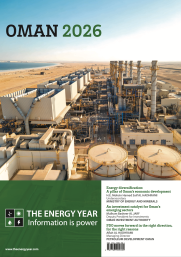


The Energy Year Oman 2026
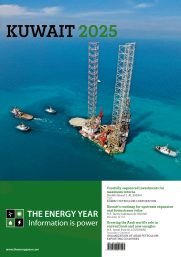
The Energy Year Kuwait 2025
The Energy Year Angola 2025
The Energy Year Nigeria 2025
The Energy Year Saudi Arabia 2025
The Energy Year UAE 2025

