
Ghana’s GOGIP: a success story in pooled insurance
January 13, 2026 Ghana
Ghana 


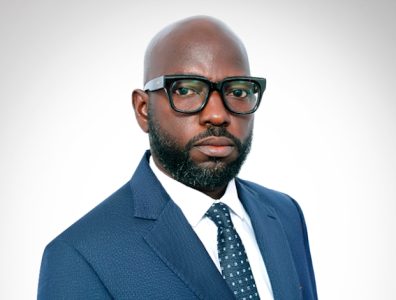
Kwabena Larbi, head of pool at the Ghana Oil and Gas Insurance Pool (GOGIP), talks to The Energy Year about centralising upstream risk to strengthen local capacity and preparing for a new wave of offshore investment. GOGIP provides mandatory insurance cover for Ghana’s upstream oil and gas activities, pooling domestic insurers to underwrite exploration, production and decommissioning risks.
GOGIP is often cited as a model for local content in oil and gas insurance. What makes the Ghanaian model attractive to other countries?
We are the only country in Africa that has built this kind of upstream insurance structure successfully. Any country that discovers oil today is asking how to replicate our model. Senegal and Mozambique, for instance, are looking at our model. Nigeria has its own model with varying experience compared to the Ghana Model.
The key is centralisation. If you are a major or super-major oil company, you typically deal with global brokers such as Marsh and Aon, and you come into a market expecting to dictate terms to fragmented local insurers. That puts the local industry at a disadvantage. But when all the local capacity is pooled into a single negotiating body, like GOGIP, the balance shifts. If we say we want 10% of the risk, for example, companies must engage.
By removing that fragmentation, we gain leverage. Instead of competing against each other to undercut prices, we negotiate as one.
What exactly does GOGIP insure, and how is your authority structured?
We insure all upstream oil and gas activities in Ghana. That includes but is not limited to exploration, development, production and even decommissioning. The entire value chain is covered. Our mandate is focused on upstream activities. Downstream and midstream operations fall outside our current scope. GOGIP operates as a contractual pool under NIC oversight, with one member appointed as pool manager for all members.
Ghana is a non-admitted insurance market. How does that impact global operators trying to do business in-country?
It means that foreign insurers cannot write oil and gas business directly in Ghana. If a company is bringing in a rig, for instance, they must place insurance locally. They get a Ghanaian policy and then reinsure back into the global markets.
This is backed by regulation. Following the 2007 Jubilee discovery, the National Insurance Commission and the Petroleum Commission jointly issued the Protocol for Oil and Gas Insurance Placement under the Insurance Act, 2021 (1061) and the Petroleum (Local Content and Local Participation) Regulation, 2013 (L.I. 2204). These require that any property or liability domiciled in Ghana, or any imported equipment for operations, be insured in-country. So, for example, if a supermajor is bringing in machinery or a rig for six months, they must go through us. That gives us visibility on every asset and risk coming into the country.
How does GOGIP create value for the local insurance market?
By pooling capacity and ensuring upstream risks are placed locally, GOGIP strengthens Ghana’s insurance industry, builds technical expertise and retains premiums in-country, supporting local economic growth.
How do you price premiums, especially when the risk is part of a global fleet with economies of scale?
Great question. Say a rig operator has 50 rigs insured under one global policy. They negotiate a discount in London because of volume. But when that operator brings one rig to Ghana, we’re only insuring that one rig. We don’t benefit from the economies of scale.
We benchmark premiums to ensure fair and sustainable pricing in line with international standards and local regulations. Our aim is prudent underwriting to maintain financial stability and compliance.
What does the growth of Ghana’s upstream sector mean for your work?
Our growth is directly tied to upstream investment. We insure every new FPSO, drilling unit, flowline or well. We also cover loss of production income when incidents disrupt operations. For example, past events have demonstrated the scale of potential losses in both physical damage and production downtime. We also provide cover for rigs entering Ghana for short-term drilling campaigns, ensuring compliance and risk management for temporary operations.
Managing such large-scale risks requires robust capital structures and strong reinsurance partnerships. We partner with globally rated reinsurers to ensure resilience and capacity for major events.
You mentioned that your capacity has expanded significantly in recent years. Can you explain how that happened?
In 2017, we were writing about USD 40 million in business. By 2019, the market appetite had grown. Companies wanted to write more business, and we expanded the pool’s limits.
GOGIP has significantly expanded its underwriting capacity in recent years, supported by strong local participation and global reinsurance partnerships. We manage risk through structured reinsurance partnerships and prudent allocation strategies, ensuring diversification and compliance with regulatory guidelines.
What are your top priorities for 2026?
First, prudent underwriting. We’re not trying to grab every deal – we want to deploy capital wisely, with good returns for our members. Second, preparation for growth. We know a new wave of upstream projects is coming in the next 18-24 months. We need to be ready.
And finally, continued collaboration. Our model works because it’s unified. We’ll keep aligning with the regulator, global reinsurers and local stakeholders to keep Ghana at the forefront of energy insurance in Africa.
Read our latest insights on:
-

-

-

Securing Ghana’s subsea integrity
INTERVIEW
More content from Ghana
Latest news and features





Latest Reports
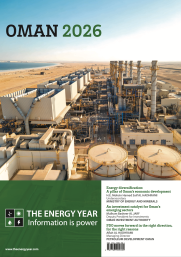


The Energy Year Oman 2026
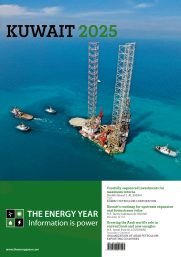
The Energy Year Kuwait 2025
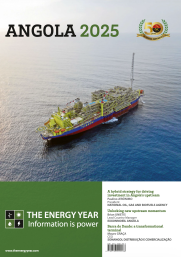
The Energy Year Angola 2025
The Energy Year Nigeria 2025
The Energy Year Saudi Arabia 2025
The Energy Year UAE 2025

