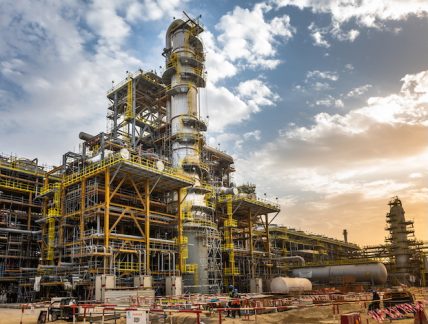
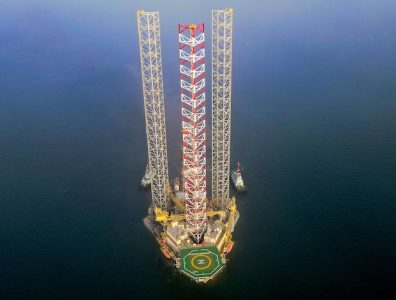
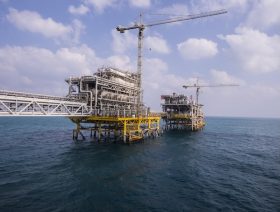
Saipem has secured two contracts worth USD 400 million from Saudi Aramco for EPCI work in the Safaniya offshore oilfield.
READ MOREH.E. Haitham AL GHAIS
Secretary-General
OPEC
2024 oil reserves:267.2 billion barrels
2024 oil production:9 million bopd
2024 gas reserves:9.7 tcm
2024 gas production:102.9 bcm
Oil and gas have been central to Saudi Arabia’s economic development and global standing for decades. The country holds one of the world’s largest proven crude oil reserves, accounting for around 17% of the global total, and consistently ranks among the top oil producers and exporters worldwide.
Crude oil and refined products are the backbone of Saudi Arabia’s external trade and public finances, dominating exports and providing a substantial share of government revenue. Sustained diversification efforts and fiscal reforms have gradually reduced exposure to oil price volatility.
The national energy industry is vertically integrated under NOC Saudi Aramco, which oversees upstream production, midstream infrastructure, refining and petrochemicals. Despite the existence of more than 100 active reservoirs, Saudi Arabia’s oil production is concentrated in a relatively small number of giant fields. These include Ghawar, the world’s largest onshore oilfield, and Safaniya, the largest offshore.
Alongside crude, Saudi Arabia holds significant natural gas resources, which are increasingly being developed to meet rising domestic demand, support industrial growth and enable greater volumes of crude oil to be directed toward export markets. Expanding gas production also furthers efforts to reduce the use of liquid fuels in power generation.
Downstream expansion has become a priority for economic diversification, and Saudi Arabia has invested heavily to position itself as a major global supplier of value-added energy products. In 2020, Saudi Aramco acquired 70% of Saudi Basic Industries Corporation (SABIC) to advance the country’s long-term liquids-to-chemicals strategy.
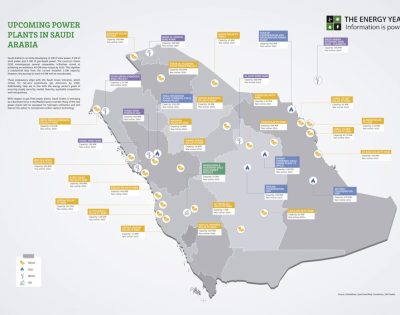
Saudi Arabia has made commitments under the Saudi Green Initiative and Vision 2030 to achieve net-zero GHG emissions by 2060. The country is scaling up renewable energy deployment, particularly utility-scale solar and wind, leveraging its ample solar irradiation and available land. National plans target renewables contributing around 50% of installed electricity capacity by 2030, supported by large procurement programmes, grid upgrades and storage integration.
Aramco has resumed crude oil loadings at the Ras Tanura terminal after a halt of nearly four months.
READ MORE
ADES Holding has acquired five premium jackup rigs from Saipem for USD 285 million to expand its regional fleet and backlog.
READ MORE
Aramco is exploring the sale of sulphur storage and export assets, as well as other infrastructure, to support Saudi Arabia’s…
READ MORE
Saipem has secured an EPC contract to build a new compression system for the Uthmaniyah Gas Compression Plant in Saudi Arabia.
READ MORE
Aramco has divested its stakes in two refining and petrochemicals assets in Malaysia to Petronas.
READ MORE
Yahya Al Yami of Khalifa Abdulrahman Algosaibi Investment talks about the competitive advantages of operating within the Saudi…
READ MORE
Meshary Al Ayed of TAQA Geothermal talks about leveraging the company’s international experience to develop geothermal…
READ MORE
Saipem has secured two contracts worth USD 400 million from Saudi Aramco for EPCI work in the Safaniya offshore oilfield.
READ MORE
Anosh Neterwala of the Neterwala Group talks about bundling environmental services with oil and gas offerings to drive sustainability.
READ MORE
Saudi Arabia has restored throughput capacity of 7 million bopd to the East-West Pipeline after attacks, supporting export continuity.
READ MOREWHOSE PLATFORM IS THIS?
ASK US