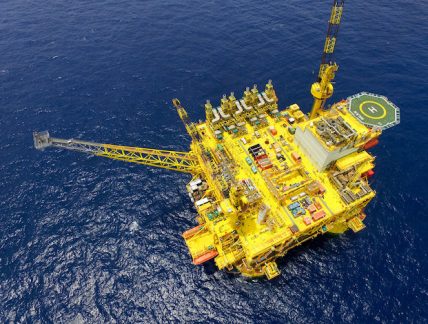
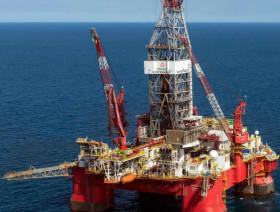
Eni plans to fast-track its shallow-water Amoca field development in the Gulf of Mexico, international media reported Tuesday.
In an interview with the Financial…
READ MORE
2024 oil reserves:7.49 billion barrels
2024 oil production:197 million bopd
2024 gas reserves:245 bcm
2024 gas production:40 bcm
The implementation of Mexico’s Energy Reform in 2013–2014 marked a turning point for the country’s hydrocarbons sector. The reform reshaped Petróleos Mexicanos (Pemex), introduced new regulators and opened large parts of the oil and gas value chain to private and foreign investment. Between 2015 and 2018, Mexico carried out multiple licensing rounds and contract awards, and Pemex launched a farmout programme to bring in partners for technically complex or capital-intensive acreage.
However, the momentum of the reform slowed significantly from 2019 onwards as policy shifted toward strengthening the role of state companies. New competitive bid rounds were largely paused, Pemex’s farmout strategy was shelved and the government prioritised production from Pemex-operated areas while seeking to increase refining self-sufficiency. Recent reforms under President Claudia Sheinbaum have continued to emphasise the strategic role of Pemex and the state, while signalling scope for private participation through partnerships under revised rules.
Mexico’s greatest remaining exploration potential lies offshore, particularly in the Gulf of Mexico, where large areas remain underexplored relative to the basin’s overall prospectivity. At the same time, one of the most important structural trends shaping the energy system is rising demand for natural gas, driven primarily by power generation and industry. Mexico has become increasingly dependent on US pipeline gas, and while the country has expanded its transportation network over the past decade, constraints in storage, redundancy and regional connectivity continue to create bottlenecks. CENAGAS operates the national integrated gas pipeline system, which stretches more than 10,000 kilometres.
Despite being a crude exporter, Mexico has long relied heavily on imported refined products. The government has sought to reduce this dependence through refinery rehabilitation and by building the Olmeca (Dos Bocas) refinery, a 340,000-bpd plant that has been ramping up operations through 2024 and 2025. Meanwhile, the downstream retail market has become more competitive since price liberalisation in 2017, with international brands and independent retailers entering the sector, even as Pemex remains the dominant player and government policy continues to influence pricing and supply dynamics.
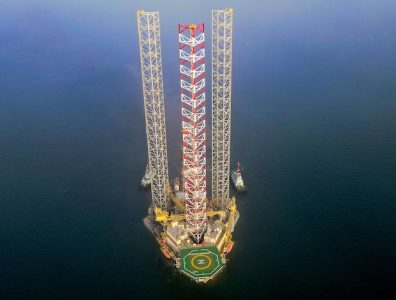
ADES Holding has acquired five premium jackup rigs from Saipem for USD 285 million to expand its regional fleet and backlog.
READ MORE
Olivier Laurac of Newrest talks about scaling integrated remote-site services for mining and oil and gas projects in Latin…
READ MORE
EagleRock Land has reached a valuation of USD 3 billion following its debut listing on the New York Stock Exchange.
READ MORE
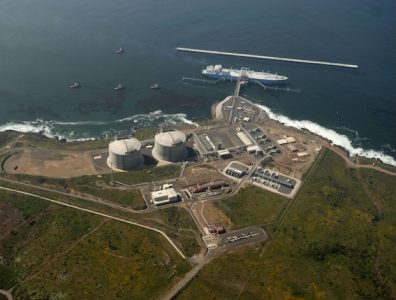
Sempra is targeting first LNG at its 3.25-million-tpy Energia Costa Azul LNG liquefaction facility in June.
READ MORE
Devon Energy and Coterra Energy shareholders have approved an all-stock deal to merge the companies into a leading US shale…
READ MORE
Trafigura has signed a USD 1-billion oil prepayment agreement to become the exclusive offtaker of Gabon's profit oil for seven…
READ MORE
Woodside and PEMEX have launched drilling at the Trion oilfield in Mexico, a USD 7.2-billion development targeting first oil in…
READ MORE
Eni plans to fast-track its shallow-water Amoca field development in the Gulf of Mexico, international media reported Tuesday.
In an interview with the Financial…
READ MORE
Alberto Galvis, CEO of Citla Energy, talks to TOGY about interactive consultation in the energy reform and the state of safety and environmental regulation. Founded in…
READ MORE
Philippe Peccard, president of Linde Middle East, talks to TOGY about Saudi Arabia as the leader in regional industry, new areas of focus for industrial gases and the…
READ MORE
Mexico’s Round 2.4 tender will offer 30 deepwater blocks on January 31, 2018, the country’s National Hydrocarbons Commission (CNH) said Wednesday.
The blocks are…
READ MORE
Mexico’s National Hydrocarbons Commission (CNH) will postpone its next E&P tender, the commission said Monday.
The decision was taken after a consortium of Talos…
READ MORE
Andrés A. Fusco Clynes, energy commissioner of Tamaulipas state, talks to TOGY about the developments underway to exploit the state’s natural resource potential. The…
READ MORE
US Secretary of the Interior Ryan Zinke announced the sale of new offshore oil and gas leases in the Gulf of Mexico on Thursday. The move represents the first offshore…
READ MORE
Mexico’s National Hydrocarbons Commission approved a request for force majeure status at Renaissance Oil’s Contract Area 19 (Pontón) Thursday.
The Canadian…
READ MORE
Craig Steinke, CEO of Renaissance Oil, talks to TOGY about how the Mexican government should address policy-making in the upstream sector post-reform. Renaissance…
READ MORE
IEnova will construct a marine hydrocarbons terminal in the Port of Veracruz, the company announced Wednesday.
A local subsidiary of US gas company Sempra Energy,…
READ MOREWHOSE PLATFORM IS THIS?
ASK US